My journey into this wonderful hobby began a few years ago. Like many adults, I found it harder and harder to get friends together for a regular game night.
The pandemic really changed things. Suddenly, the desire for a creative outlet met the reality of being stuck at home. I rediscovered the pure joy of making up stories, just for myself.
I’ve loved traditional role-playing for years. But coordinating schedules and managing group dynamics often left me frustrated. I missed the magic of simply exploring a world.
Playing by myself gave that back to me. There’s a unique satisfaction in crafting a narrative entirely on your own terms. No waiting for weekends. No creative compromises.
This isn’t just a substitute for group play. It’s a rich and distinct experience with its own amazing tools and communities. The sense of adventure is completely personal.
In this article, I’ll share my favorite titles for playing alone. You’ll get insights into different play styles and practical tips to start your own adventure. Let’s dive in.
Key Takeaways
- Solo tabletop gaming surged in popularity as a flexible creative outlet, especially for adults with busy schedules.
- It offers a unique way to engage in storytelling and world-building without needing to coordinate a group.
- The experience can rekindle a personal sense of adventure and creative play that group dynamics sometimes complicate.
- Playing alone is not a lesser version of group RPGs but a distinct hobby with its own rich ecosystem of games.
- This guide will provide a curated list of great games and practical advice to begin your solo journey.
Why I Fell in Love with Playing Tabletop RPGs Solo
I discovered the world of collaborative storytelling as an adult, after a childhood where it was strictly off-limits. Growing up homeschooled in a conservative household, titles like Dungeons & Dragons were considered forbidden. That early barrier made my eventual entry feel like a revelation.
In my early thirties, I finally took the plunge. The early 2010s were my gateway. Suddenly, I was crafting characters and weaving plots with friends. The thrill of a shared adventure was utterly new to me.
I dove in headfirst, even attending the Origins gaming convention. The energy of a hall filled with fellow enthusiasts was electric. For a while, it was pure magic. I had found my people and my creative outlet.
But a disappointing shift occurred over time. I began encountering toxic actors and hypocrisy within some circles. The community dynamics I loved started to feel strained. The joy I found in group sessions slowly drained away.
It wasn’t about the game itself. It was the human element that turned sour. I stepped back from the hobby, feeling that core spark was lost.
The forced isolation of the pandemic changed everything. Stuck at home, I longed for that creative spark. On a whim, I tried a roleplaying experience designed for one player. It was a quiet, personal revolution.
This form of play offered a safe and judgment-free space. I could explore any genre or idea without hesitation. There was no need to manage schedules or personalities. The story was entirely mine to shape.
A profound personal benefit emerged. These sessions became a consistent practice for creative writing. I worked on descriptive skills and narrative pacing without pressure. It was more than a game; it was a writing workshop in disguise.
Contrast this with the pressures of group dynamics. Collaborating is wonderful, but it requires compromise. Playing alone granted liberating freedom. I could follow a whim for hours, or put everything away in a moment.
This way of engaging rekindled my love for the core of these adventures—imagination and story. It returned the sense of wonder to its purest, most personal form. I wasn’t just playing; I was reclaiming a great time for myself.
The mechanics became tools for my own curiosity, not rules to debate. I was both game master and protagonist, exploring worlds at my own pace. That singular experience is why I fell in love.
It reminded me why I sought out this hobby years ago. The magic wasn’t in the crowd. It was always in the potential of a blank page and a single, curious mind ready for action.
The Unique Appeal of Solo Tabletop Play
What makes this style of play so compelling isn’t just convenience. It’s a complete reimagining of the creative process. You get to explore themes and mechanics that might not fit a traditional group.
The sheer freedom to start is a huge draw. You can jump into a game the moment inspiration strikes. There’s no scheduling headache or waiting for other people.
This opens up a unique creative space. Want to run a melancholy story about building a town? Or a tense survival experience on a haunted tower? These niche ideas flourish here.
Many of these games are incredible brainstorming tools. A single session can generate characters, plots, and settings. You can harvest these ideas for other projects.
Think of it as a private creative workshop. You focus entirely on the aspects you love most. That could be deep world-building, tactical dungeon crawls, or emotional narrative.
| Aspect | Group Play Experience | Solo Play Experience |
|---|---|---|
| Creative Control | Shared, requires collaboration and compromise. | Fully personal, allowing unfiltered exploration of ideas. |
| Pacing & Schedule | Set by group availability; sessions are planned events. | Set by your own rhythm; you can play for 15 minutes or 3 hours. |
| Genre & Theme | Often needs group consensus, favoring broadly appealing concepts. | Can dive into hyper-specific, niche, or experimental genres without hesitation. |
| Primary Focus | Social interaction, shared storytelling, and group dynamics. | Introspection, personal narrative, and deep immersion in the game world. |
| Tools Used | Primarily core rules and a human Game Master. | Core rules plus oracles, random tables, and journaling prompts to simulate discovery. |
Some folks worry this way of playing is lonely. I found the opposite is true. It fosters a deep, intimate connection with your own imagination.
You’re not just telling yourself a story. Modern systems use clever tools like oracles and random tables. These simulate the surprise a good Game Master provides.
These mechanics ask questions and introduce unexpected twists. A deck of prompt cards can throw a mystery into your path. A random event table can make a quiet time in town erupt into chaos.
This has let me engage with games I love on my own terms. I’ve explored Dungeon World and Blades in the Dark as a solo player. I did it over years, at my own pace.
That’s the core appeal. It turns the tabletop into a personal laboratory for adventure. Every session is a unique experience crafted just for you.
Exploring the Different Types of Solo RPG Experiences
When you start exploring games designed for one, you’ll quickly notice they fall into distinct creative categories. Understanding these styles helps you pick the perfect game for your mood.
Each type offers a different way to engage your imagination. Some are like quiet writing exercises. Others feel like classic adventure modules.
I’ve broken down the four main categories I encounter most often. This isn’t a rigid list, but a helpful guide to the landscape.
World-Building and Map-Making Games
These titles turn you into a cartographer and historian. Your primary action is creating a setting, not guiding a character.
A fantastic example is Ex Novo. This system provides tools to map out a settlement and develop it over years. You answer prompts about its founding, conflicts, and growth.
I used it to create a port town for a future campaign. The experience was deeply satisfying. I wasn’t just making a list of locations.
I was weaving a history that felt alive. These games are perfect for Game Masters looking to develop campaign settings. They generate rich content you can use later with a group.
Narrative and Journaling-Focused Games
This genre prioritizes reflective writing and emergent story over complex rules. You might play as a location, an object, or a concept.
In Artefact, you chronicle the life of a legendary magical item. You tell its story through different keepers across centuries. It’s a beautiful, poignant experience.
Another favorite is Ghostbox, where you write letters to an abandoned mailbox. The mechanics are light. The focus is on atmosphere and emotional discovery.
These games feel like a private writing workshop. They’re a great time for anyone who loves putting pen to paper. The sense of authorship is powerful and personal.
Structured Adventure and Dungeon Crawls
If you miss the feel of traditional fantasy modules, this is your category. These games provide familiar frameworks of exploration, combat, and loot.
Dungeon World Solo offers a guide for solo play in a classic dungeon crawl. The Last Fighter series delivers punchy, arcade-style action.
For brutal dark fantasy, look at Mork Borg with its Solitary Defilement supplements. The rules are streamlined for deadly, stylish adventure.
This type often uses random tables and oracles to simulate a Game Master. You still get the thrill of exploring unknown corridors. The experience is tactical and goal-oriented.
Horror and Mystery-Driven Experiences
This genre excels at building tension and suspense. Mechanics like countdowns, tarot draws, and clue trackers create incredible unpredictability.
Welcome to the Habitrails is a surreal horror game using a tarot deck. You explore a liminal office space that feels deeply wrong. It’s unsettling in the best way.
Little Town crafts a mystery inspired by Twin Peaks. The Cold Empty is a structured, text-adventure-style occult mystery set in Antarctica.
These games are masters of atmosphere. They use cards and prompts to drip-feed dread. You’re not just solving a puzzle; you’re surviving an experience.
Many titles blend these categories beautifully. A dungeon crawl might have strong journaling elements. A mystery game could involve mapping a town.
Use these categories as a starting point. Ask yourself what kind of creative play you’re craving tonight. Do you want to build a world, tell a story, conquer a tower, or unravel a horror?
That simple question is the best guide to finding your next great game. The variety ensures there’s always a new type of adventure waiting.
My Curated List of Must-Try Solo Tabletop RPGs
Let me share my personal recommendations for the most engaging and well-designed solo roleplaying games available. This list comes from many hours at my desk, exploring different systems and styles.
Each title here has given me a great time. They offer unique mechanics and compelling experiences. I hope you find something that sparks your imagination.
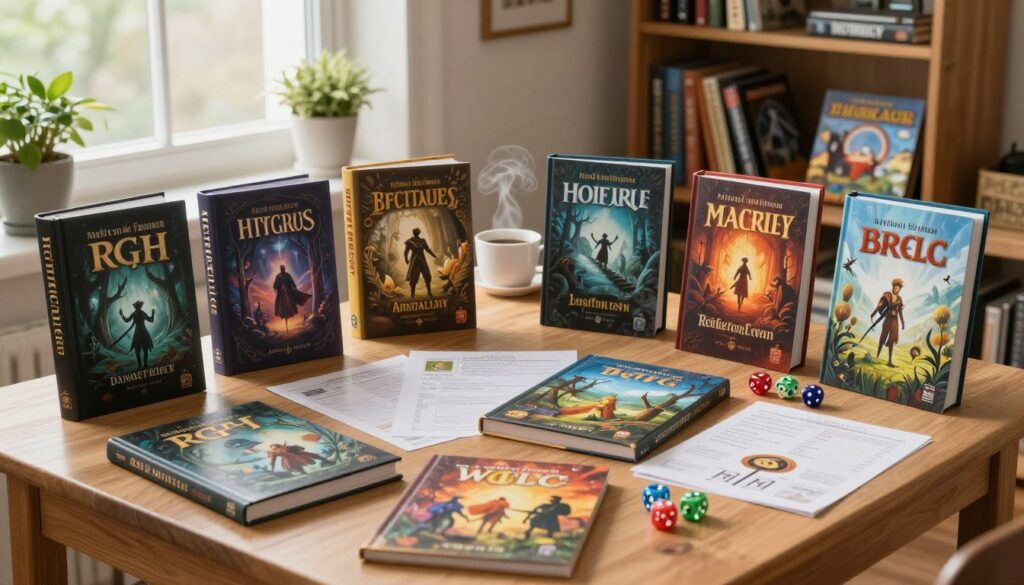
To help you compare, here’s a quick overview of these fantastic games.
| Game Title | Genre / Theme | Key Mechanic / Tool | My Play Style Note |
|---|---|---|---|
| Ironsworn / Starforged | Viking fantasy / Sci-fi | Progress Tracks & Moves | Deep, campaign-driven adventure |
| Mythic GM Emulator | Genre-less toolbox | Fate Chart & Random Events | Inject surprise into any game |
| Ex Novo | City-building | Phases & Dice Rolls | Creative map-making for a town |
| Welcome to the Habitrails | Surreal liminal horror | Standard Tarot Deck | Atmospheric, eerie narrative |
| Wretched & Alone System | Desolation tension | Jenga-style tower | Physically tense, darkly comedic |
| Artefact | Legendary object history | Phases of history | Lore-building for a magical item |
| Mork Borg: Solitary Defilement | OSR dark fantasy | Rules-lite with metal aesthetic | Brutal, stylish dungeon crawl |
Ironsworn / Starforged: The Gold Standard for Solo Adventure
This free system became an obsession for me. Its elegant “Moves” structure guides every action your character takes. The tension built into its Progress Tracks is masterful.
You feel every success and setback. The sci-fi sibling, Starforged, perfects the formula with refined rules. I’ve spent countless years in these worlds.
The community around these games is huge and creative. Fans produce endless hacks and supplements. It’s the best way to play game alone for a deep, satisfying story.
Mythic GM Emulator: The Ultimate Toolbox for Any Game
Think of this as the Swiss Army knife of solo tools. Its genre-less design means it works with any rpg you love. The Fate Chart answers Yes/No questions with surprising nuance.
Random event lists inject chaos into your plans. I use it to add surprise to Dungeons & Dragons sessions I run for myself. Start with one mechanic at a time to avoid overwhelm.
The publisher even puts out a monthly magazine with new ideas. It empowers you to be your own game master.
Ex Novo: Build a City From the Ground Up
I watched a settlement grow from a single idea into a mapped history. This game guides you through phases of founding, conflict, and growth. Dice rolls introduce unexpected twists.
It’s a powerful world-building aid for Game Masters. You can use the town you create in a future group campaign. It supports up to four players for a collaborative map-making experience.
The sense of creation is deeply satisfying. You’re not just making a list of locations.
Welcome to the Habitrails: Surreal, Liminal Horror
This game evokes an uncanny, eerie feeling like no other. You explore a bizarre suburban space that feels deeply wrong. A standard 78-card tarot deck drives the entire narrative.
Each draw builds a community of lost souls. The horror is subtle and psychological. It’s a masterclass in atmosphere.
I found myself thinking about its liminal world long after I put the cards away. Perfect for a quiet, unsettling evening.
The Wretched and Alone System (e.g., Fake Guru Real Vice): Tension on a Tower
The physical tension of the Jenga-style tower mechanic is brilliant. In Fake Guru Real Vice, you play a disgraced media figure. Each block pulled risks your entire crumbling empire.
My playthrough as a televangelist was darkly comedic. The system generates stories of desperation and folly. It’s a unique type of experience that gets your heart racing.
You’re not just rolling dice. You’re physically balancing your fate.
Artefact: Tell the Story of a Legendary Object
This game offers a unique perspective. You chronicle the life of a magical item like a Weapon, Instrument, Deck, or Tome. I crafted the biography of a sentient sword over centuries.
It’s perfect for creating deep lore for campaign items. The story unfolds through different keepers and eras. The emotional weight you can build is surprising.
It feels like a writing exercise with a fantastic prompt. You’ll treasure the one artifact you create.
Mork Borg: Solitary Defilement: Brutal, Stylish Dark Fantasy
Celebrate over-the-top grimdark style with simple rules. The metal aesthetic is everywhere in this fantasy game. Solitary Defilement is a set of supplements that adapts the core for one player.
It led me to enjoy OSR gameplay I thought wasn’t for me. The action is fast, deadly, and dripping with style. Many creative hacks exist, like Frontier Scum for a western twist.
It’s a lot of fun if you want a no-fuss, high-impact adventure. The people who love it are passionate.
Essential Tools and Oracles to Empower Your Solo Play
Oracles are the unsung heroes of solo tabletop gaming, transforming a quiet evening into an unpredictable adventure. These clever tools act as your virtual Game Master. They answer questions and generate events you didn’t plan.
Think of them as a creative partner in a box. They provide the surprise element a human guide would. This is the heart of playing alone.
You ask, “Is the tavern keeper hiding something?” The oracle gives a nuanced answer. Suddenly, a simple drink leads to a mystery.
I’ve collected a lot of these mechanics over the years. They fall into a few key categories. Each serves a different need during your play.
The GameMaster’s Apprentice Decks
These physical cards are a powerhouse of instant inspiration. Each card is packed with random words, names, and sensory details. I keep a deck on my desk for quick brainstorming.
You can draw a card to kickstart a scene. It might give you a location like “derelict spacecraft” or a sense like “smell of ozone.” This solves writer’s block in an instant.
The decks are genre-themed. There are versions for sci-fi, horror, and fantasy. I use the base deck most often.
Here’s what a typical card contains:
- A central random word for a concept or object.
- A short list of names for characters or places.
- A grid of numbers for quick yes/no oracle answers.
- Several icons representing possible events or action.
- A few sensory details to flesh out a world.
They are perfect for when you need a detail fast. You don’t even need a full game system running. Just draw a card and let your imagination connect the dots.
One Page Solo Engine and MUNE
If you want simplicity, start here. These are fantastic, lightweight oracles. They fit on a single page or in a small pamphlet.
One Page Solo Engine uses a simple d6 roll. It gives you a “Yes, and,” “No, but,” style answer. It includes random event prompts too.
MUNE (the Mythic Universal Neutral Emulator) is similarly elegant. It uses a dice pool to answer questions. It has a clean method for generating unexpected twists.
I recommend these for beginners for a few reasons:
- Minimal fuss: You can learn the rules in under a minute.
- Universal use: They work with almost any game you own.
- Low pressure: They don’t overwhelm you with a lot of information.
I used MUNE for my first solo ttrpg experience. It helped me understand how an oracle conversation works. Now I sometimes combine it with more complex tools.
Random Tables and Adventure Crafters
Sometimes you need more than a yes or no. You need a plot. This is where structured generators shine.
The Adventure Crafter is a brilliant system for this. It helps you generate coherent plots, villains, and twists. It moves beyond simple randomness.
You use it to build a framework for your story. It ensures your adventure has rising action and a satisfying arc. I’ve used it to plan entire campaigns for myself.
Random tables are more focused. You might find a table for “Tavern Encounters” or “Strange Forest Plants.” They provide specific details.
My practical advice is to mix and match. Use a simple oracle for core questions. Then consult a random table for specific color.
“Is there a secret compartment in the old desk?” (Oracle says: Yes, but it’s trapped.)
“What’s inside?” (Roll on a “Trinkets & Oddities” table: A locket with a faded portrait.)
This layered approach creates deep, engaging sessions. It feels less like rolling dice and more like uncovering a mystery.
Other notable oracle tools include CRGE, UNE, BOLD, Motif, and the Juice Oracle. Each has its own flavor. Try a few to see which mechanics spark your creativity.
Remember, these tools are there to serve you, not constrain you. Finding your right combination is a personal journey. It dramatically enhances the solo games experience.
Don’t forget digital resources. Mobile apps exist for many popular oracles. Online generators can provide instant inspiration during a play session.
They save you time and keep the flow going. Whether you use physical cards or a phone app, the goal is the same. Empower your creativity and make every session uniquely yours.
Getting Started: My Friendly Tips for Your First Solo Session
Taking that first step into playing by yourself can feel a little daunting, but trust me, it’s simpler than you think. My biggest piece of advice is to start simple. Pick just one game from my list that genuinely calls to you.
Don’t get overwhelmed by all the options. Choose the one whose theme or mechanics spark your curiosity. That excitement is your best guide.
Once you have your game, set up a comfortable space. This creates a helpful ritual. Gather your notebook, dice, and the rules. A dedicated spot helps your mind shift into creative mode.
- Your chosen game booklet or PDF.
- A notebook or journal for your story.
- Dice, a deck of cards, or any required tools.
- A pen you enjoy writing with.
- A quiet hour for yourself.
Now, embrace the “play to find out” mentality. This is the heart of the experience. Let the oracle’s answers and random rolls guide the narrative.
Even if it leads somewhere unexpected, go with it. The surprise is where the magic happens. Don’t over-prepare a plot. Use random tables and see what unfolds.
Set a small, focused goal for your first session. Aim to “explore one room of the dungeon” or “have one conversation in the town square.” This builds confidence quickly.
A short, successful play is better than a long, frustrating one. You can always continue next time.
Keep a journal of your adventure. Write down what happens. This isn’t just for tracking the story. It’s a fantastic way to practice writing and reflect on your creative choices.
My personal beginner mistake was trying to use every rule and tool at once. I learned that mastering one oracle mechanic is far better than juggling three poorly.
For example, with a tool like the Mythic GM Emulator, implement one piece at a time. Get comfortable with the Fate Chart before adding complex event lists.
This way, you won’t feel bogged down by rules. The system becomes a helper, not a hurdle.
Most importantly, remember there is no “wrong” way to do this. If you’re enjoying the process and telling a story that interests you, you’re doing it right.
This is your personal creative world. You are both the game master and the player. The goal is to have a great time on your own terms.
So take a deep breath, pick up the dice, and begin. Your unique adventure is waiting to be discovered.
Conclusion: Your Solo Tabletop Adventure Awaits
The journey we’ve explored together proves that incredible stories don’t require a crowded table. This vibrant and flexible hobby can fit into any schedule.
My year of personal play was a meaningful creative practice. It honed my imagination and brought consistent joy. The diversity of experiences ensures a perfect game for every kind of player.
Use my guide as a launching pad for your own unique adventure. Your curiosity is the only essential tool. I’m confident you’ll discover the same great fulfillment.
Join the welcoming online community to share tales and find support. Good luck on your first session. May your story be truly unforgettable.
FAQ
What’s the main difference between playing a tabletop RPG alone versus with a group?
I’m new to this. What’s a great first game to try playing alone?
Do I need special tools or dice to start?
Can I use these solo systems with my existing favorite RPGs, like Dungeons & Dragons?
Are these games mostly about fighting monsters and dungeon crawling?
How do I handle not knowing what happens next without a Game Master?

Dr. Silas Raven is a lifelong world-builder and narrative architect with a PhD in Mythological Structures. Dedicated to the art of the ‘deep dive,’ he founded Ravenous RPG to help Game Masters and players move beyond the basics. Whether he’s dissecting complex mechanics or weaving intricate lore, Dr. Raven’s mission is simple: to provide the sustenance every tabletop enthusiast needs to build unforgettable campaigns.