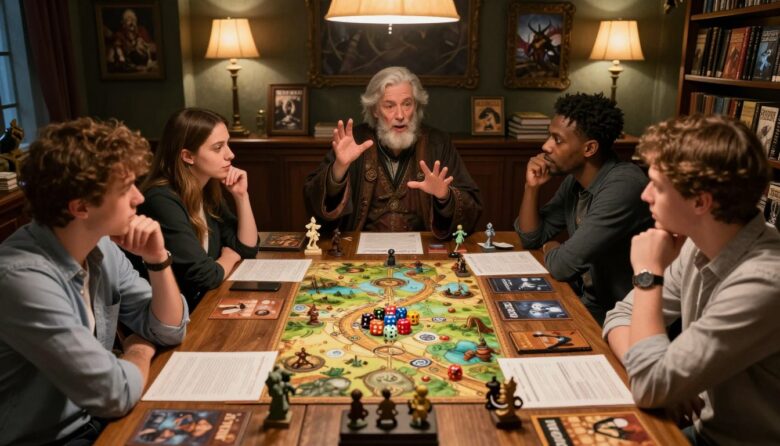
Balance combat and storytelling through purposeful scenes, varied pressure, clear objectives, meaningful consequences, and pacing suited to the system and group, rather than imposing an arbitrary split between battles and narrative.

Five practical narrative techniques address slow openings, rigid plots, passive participation, forgotten consequences, and fictional confusion by emphasizing immediate pressure, situation-based preparation, shared narration, responsive outcomes, and clear scene information.

Build a playable campaign world by defining its premise, mapping meaningful choices, creating an anchor settlement, connecting NPCs and factions, seeding varied adventure sites, and expanding the setting through consequences from play.

Handle derailed campaigns by distinguishing changed routes from premise or boundary problems, preparing responsive situations, using modular locations and motives, resolving unexpected actions consistently, preserving agency, and recording improvised facts.

Compare digital and analog tools for tracking NPC attitudes, motives, obligations, connections, and next moves, with guidance on retrieval speed, update friction, filtering, permissions, exports, offline access, and lightweight record structures.