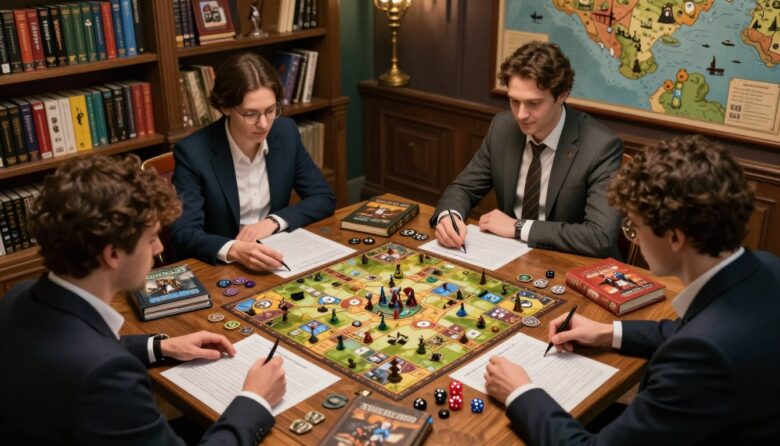
Pathfinder Second Edition faced an unusual challenge: it had to replace a deeply supported first edition without abandoning the tactical depth and character customization that defined the game. Its solution was not to make Pathfinder rules-light. Instead, it rebuilt the underlying mathematics, action economy, classes, and encounter design around a more consistent framework.
That framework remains Pathfinder 2e’s greatest strength in 2026. Combat rewards positioning, preparation, and coordinated actions. Character advancement offers meaningful choices at nearly every level. Game Masters receive unusually dependable tools for building encounters and adjudicating common situations.
The tradeoff is equally clear. Pathfinder 2e asks players to learn its terminology, conditions, degrees of success, and tightly connected rules. It can support improvisation and character-driven stories, but it is not designed to disappear into the background. Groups looking for tactical fantasy will find one of the strongest systems available; groups wanting loose, low-preparation play may find it unnecessarily demanding.
The Short Verdict
Pathfinder 2e is still a leading choice for tactical fantasy, but “king” depends on what a group values. Its claim is strongest in five areas:
- Structured tactical combat: The three-action economy creates flexible turns without making every action equally effective.
- Team-oriented encounter design: Conditions, positioning, support abilities, and small modifiers have measurable value.
- Extensive character customization: Ancestry, background, class, skills, feats, and archetypes create many viable development paths.
- Useful Game Master tools: Encounter budgets, creature levels, rarity tags, traits, and defined subsystems reduce guesswork.
- A substantial support ecosystem: The game has searchable rules references, character builders, virtual tabletop support, published adventures, and a large catalog of setting material.
Its main drawbacks are a considerable learning curve, frequent rules referencing, option overload, and combat that works best when players engage with the system as a team. It is approachable with the right introduction, but it is not a casual alternative to rules-light fantasy games.
What Pathfinder 2e Means After the Remaster
Any current review needs to account for the Pathfinder Remaster. The remastered books reorganized and revised the game while retaining the core engine of Second Edition. They also moved Pathfinder’s presentation away from terminology inherited through the Open Game License and adopted the ORC license.
The principal remastered rulebooks are Player Core, GM Core, Monster Core, and Player Core 2. They fill broadly similar roles to the earlier Core Rulebook, Gamemastery Guide, Bestiary, and Advanced Player’s Guide, although their contents are not arranged as simple page-for-page replacements.
The Remaster is not a third edition. Characters still use three actions and a reaction. Proficiency remains tied to level for trained or better capabilities. Encounters still use the same level-based assumptions, and characters still advance through ancestry, skill, general, and class feats.
Some terminology and individual options did change. Flat-footed became off-guard, attacks of opportunity became Reactive Strikes, spell levels became spell ranks, and alignment was removed as a universal mechanical framework. Schools of magic were also reorganized, while several classes received more substantial revisions.
Older Second Edition material is therefore broadly compatible, but compatibility does not mean that every legacy option can be inserted without discussion. A remastered version of a class feature or spell may supersede its earlier form, and terminology sometimes needs translation. Groups mixing legacy and remastered books should establish which version takes precedence. Organized-play campaigns may have more specific policies than a home game.
This transitional layer is a minor source of friction for newcomers. Search results, older adventures, and character guides may use legacy names even when the underlying rule still works. Starting with the remastered books and treating legacy material as optional expansion is the cleanest approach.
Why the Combat System Still Stands Out
Pathfinder 2e’s combat is built around meaningful action costs. Characters usually receive three actions on their turn and one reaction that refreshes at the start of the turn. Striding, Striking, drawing an item, Raising a Shield, attempting many skill actions, and casting spells all consume actions according to their rules.
This looks simple, but its implications are substantial. A character can move three times, attack three times, or combine movement, support, defense, and offense. Unlike systems that let a character divide movement freely around other activities, each additional movement action has an explicit cost. Flexibility does not mean unlimited efficiency.
The Three-Action Economy Rewards Variety
A typical martial turn might involve Striding into position, Striking once, and Raising a Shield. Another character might Demoralize an enemy before attacking, hoping the frightened condition will lower that enemy’s defenses. A ranged combatant could Seek a hidden opponent, attack, and then Take Cover.
Most spells require two actions, making positioning important for spellcasters. Some spells have different effects depending on how many actions are spent. The varying action costs help distinguish quick reactions, focused magical effects, and longer activities without requiring separate “standard,” “move,” and “bonus” action categories.
The system also discourages using every action to attack. Most attacks have the attack trait and contribute to the Multiple Attack Penalty. A character’s second attack in a turn is normally made at –5 and the third at –10. Agile weapons reduce those penalties to –4 and –8.
Additional attacks can still be sensible against a vulnerable target, particularly for characters with abilities designed around them. They are not the automatic best choice. Movement, defense, Recall Knowledge, Aid, Athletics maneuvers, and class abilities often produce more value than a low-probability third Strike.
Degrees of Success Make Every Modifier Matter
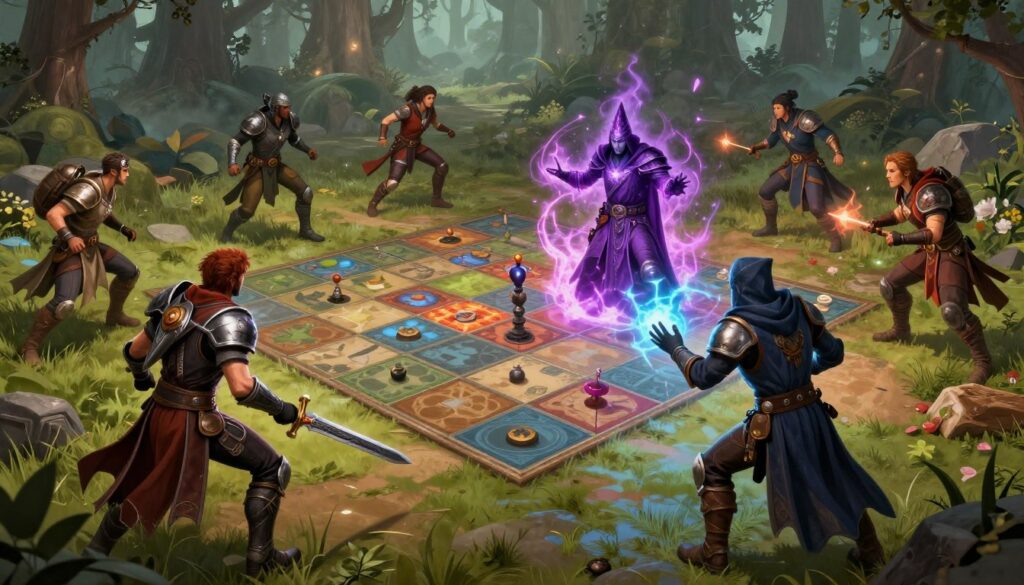
Checks generally have four possible outcomes: critical success, success, failure, and critical failure. Beating a Difficulty Class by 10 produces a critical success, while missing it by 10 produces a critical failure. A natural 20 improves the result by one degree, and a natural 1 worsens it by one degree.
This structure gives small bonuses and penalties more influence than their size suggests. A +1 may turn a failure into a success, but it can also turn a success into a critical success. The same principle applies to a penalty imposed on an enemy.
For example, flanking a creature usually makes it off-guard to the flankers, imposing a –2 circumstance penalty to its Armor Class against their melee attacks. Frightened applies a status penalty to checks and DCs. These effects can increase both hit and critical-hit chances, provided their types interact correctly.
Pathfinder controls modifier stacking through typed bonuses and penalties. Item, circumstance, and status bonuses of the same type generally do not stack with one another; only the highest applies. This curbs the sprawling bonus combinations associated with Pathfinder’s first edition, although players still need to recognize the relevant types.
Teamwork Is More Important Than Individual Optimization
A well-built character matters, but encounters are rarely solved by character construction alone. Pathfinder 2e shifts much of its optimization into play at the table. The important question is not simply whether a fighter selected a strong feat, but whether the party can create favorable conditions for that fighter’s most important attack.
A coordinated sequence might look like this:
- A character uses Recall Knowledge to identify a creature’s relevant weakness or defensive pattern.
- An ally Demoralizes the creature, making it frightened.
- A martial character moves into a flanking position, making the target off-guard.
- Another party member prepares healing, protection, or control rather than making an ineffective extra attack.
- The group concentrates its strongest abilities while the target’s defenses are reduced.
The exact sequence depends on initiative and available abilities, but the principle remains: setup actions can change the probability of later results. Players who enjoy seeing a plan come together will find this highly satisfying.
The same dependency can frustrate groups that prefer independent heroes. A player who repeatedly ignores positioning, support, and defensive choices may struggle even with a mechanically sound character. The game expects the party to behave like a party.
Movement Is Active, but Not Free
Reactive Strikes are less universal than attacks of opportunity in some other fantasy games. Many creatures do not have them, so combatants can often reposition without automatically taking damage. Creatures that do possess a Reactive Strike become tactically distinctive because their threatened area changes how everyone moves.
This supports dynamic battlefields, but maps still matter. Cover, difficult terrain, elevation, doorways, hazards, and movement speeds all influence action efficiency. A battle on an empty rectangular grid will not show the combat system at its best.
Theater-of-the-mind play is possible for simple encounters, but precise distances, areas, and flanking make a map particularly useful. Groups that dislike miniatures, tokens, or shared digital maps should consider whether they want that level of spatial detail.
Combat Can Be Punishing
The same mathematics that make encounter building reliable also make level differences consequential. A higher-level opponent has better accuracy, defenses, saving throws, and Difficulty Classes. Because those differences affect critical results as well as ordinary successes, a powerful solo enemy can feel genuinely dangerous.
This design has limitations. Repeatedly missing a high-defense boss is not enjoyable for every group. Abilities with the incapacitation trait also restrict the strongest outcomes against higher-level targets, preventing some spells from ending major encounters immediately but reducing the appeal of those spells in boss battles.
Good encounter design therefore needs variety. A campaign made entirely of single, higher-level bosses can overemphasize accuracy problems and narrow the useful tactical field. Encounters with multiple enemies, mixed objectives, hazards, terrain, and different victory conditions give more classes a chance to contribute.
Healing, Attrition, and Party Roles
Pathfinder 2e assumes that parties can recover a meaningful amount of health between many encounters. The Medicine skill, focus spells, consumables, and other healing abilities support that expectation. Treat Wounds is especially important because it gives trained characters a repeatable method of restoring Hit Points outside combat, subject to time and immunity restrictions.
This does not mean every group needs a traditional cleric. A character trained in Medicine can provide substantial recovery, and several classes have non-divine healing options. It does mean that a party should discuss how it will handle both emergency healing during an encounter and recovery afterward.
Natural overnight healing alone is not always enough to support a demanding adventuring schedule. Entering a severe encounter badly injured can turn a manageable challenge into a collapse. Published adventures sometimes assume that characters will pause to Treat Wounds, Refocus, repair shields, or otherwise reset limited resources when the fiction permits.
This approach creates a practical tension for Game Masters. Unlimited time between every battle can make recovery routine, while constant time pressure can sharply increase difficulty. Adventures work best when rest opportunities follow the fiction rather than being either universally guaranteed or arbitrarily denied.
Character Creation: Deep, Structured, and Occasionally Overwhelming
Character creation follows a clear foundation: ancestry, background, class, and attribute choices. A heritage further distinguishes the character’s ancestry, while feats and skill training define how the concept develops.
An ancestry contributes starting Hit Points, size, Speed, languages, traits, and access to ancestry feats. A heritage represents a more specific lineage or adaptation. Versatile heritages can cross ancestry boundaries, expanding concepts without replacing the ancestry itself.
A background supplies attribute choices, skill training, Lore, and usually a skill feat. It also gives the character an immediate place in the setting. A barrister, field medic, artisan, or street urchin enters play with different competencies and obvious story hooks.
The class supplies the largest share of a character’s combat identity: Hit Points per level, key attribute, proficiencies, class features, and access to class feats. Attribute modifiers are assigned through the creation process rather than rolled, keeping starting characters within the game’s expected mathematical range.
Feats Divide Customization into Manageable Categories
Instead of placing every special ability in a single list, Pathfinder separates several kinds of feats:
- Ancestry feats develop inherited, cultural, physical, or supernatural capabilities associated with an ancestry.
- Class feats shape combat techniques, magical specialties, companions, stances, and other defining class abilities.
- Skill feats expand what trained skills can accomplish in encounters, exploration, social scenes, and downtime.
- General feats provide broadly useful improvements such as durability, initiative benefits, or additional training.
This structure makes two characters of the same class easier to distinguish mechanically. Two fighters might specialize in shields, archery, reach weapons, dual wielding, battlefield control, or archetype abilities. Their base accuracy remains recognizably fighter-like, but their preferred actions and party roles can differ significantly.
Archetypes provide another layer. A dedication feat opens an archetype and subsequent feats develop it. Multiclass archetypes borrow selected abilities from another class without replacing the character’s original class progression. Other archetypes represent professions, fighting styles, magical disciplines, or setting-specific organizations.
The popular Free Archetype variant grants additional archetype feats. It can broaden character concepts and reinforce campaign themes, but it also adds decisions and can increase character-sheet complexity. It is better introduced after a group understands normal advancement rather than treated as mandatory.
Balance Is Strong, but Not Every Choice Is Equal
Pathfinder 2e narrows the gap between optimized and casually built characters compared with systems where a few stacking choices can break the expected math. A character who prioritizes the class’s key attribute and maintains appropriate equipment is unlikely to become unusable because of one imperfect feat.
That does not make every option equally useful. Some feats are situational, campaign-dependent, or primarily expressive. A wilderness ability may be excellent in a travel campaign and irrelevant in an urban intrigue game. Poison-focused options depend on enemy immunities and saving throws. Linguistic or social feats need opportunities to matter.
The game’s rarity system helps communicate this context. Common options are generally available, while uncommon and rare options may require Game Master permission, setting access, or a specific narrative justification. Rarity is not a direct measurement of power; it is also a tool for protecting a campaign’s tone and assumptions.
New players benefit from choosing a clear turn-to-turn plan before browsing every feat. “Protect allies with a shield,” “heal through Medicine,” or “control space with a reach weapon” is easier to build around than a vague attempt to cover every role.
Classes and Ancestries in the Current Game
The available character catalog now extends well beyond traditional fighters, rogues, clerics, and wizards. Options such as the Kineticist, Thaumaturge, Psychic, Magus, Summoner, Gunslinger, Inventor, Investigator, Oracle, and Witch support concepts that would require extensive multiclassing or custom rules in many fantasy games.
More choice is not automatically better for a first campaign. Several classes assume familiarity with action sequencing, resource management, enemy traits, or multiple interconnected subsystems. The breadth is most valuable when a group can distinguish between an exciting concept and an appropriate learning experience.
The Champion After Alignment
The Champion remains the armored divine defender, but the remastered version no longer relies on the old nine-alignment grid. Causes and sanctification carry more of the class’s ethical and supernatural identity. Champion reactions encourage protecting allies and punishing or mitigating attacks under specific circumstances.
This is an effective example of Pathfinder’s team-oriented design. A Champion does not merely absorb damage through a high Armor Class; positioning determines whether allies are in range of protective reactions. Players who want an independent damage dealer may find the class less direct than expected, while players who enjoy controlling enemy decisions can find it highly rewarding.
The Alchemist Is Flexible but Demanding
The remastered Alchemist uses versatile vials and Quick Alchemy to produce alchemical effects, with research fields including Bomber, Chirurgeon, Mutagenist, and Toxicologist. Its identity comes from carrying or creating the right tool for the situation rather than repeating one universally effective attack.
That versatility carries a knowledge burden. Bomb traits, elixirs, mutagens, poisons, weaknesses, action costs, and item effects all matter. The class can support many party needs, but it is not the most forgiving introduction for someone who does not want to study an extensive item list.
Goblins and Other Core Ancestries
Goblins remain a core ancestry rather than being limited to an enemy role. Their feats support mobility, unusual resilience, fire-related themes, animal affinities, and the setting’s characteristic goblin exuberance. They can be played comedically, but the ancestry also supports characters shaped by marginalization, community, and survival.
More broadly, ancestry feats keep lineage relevant throughout a campaign instead of treating it as a package selected only at first level. The limitation is that not every ancestry has the same volume or range of support. Players using less-developed options may find fewer compelling feat choices at some levels.
The Game Master Experience
Pathfinder 2e is often praised from the player side, but its strongest competitive advantage may be the guidance it gives Game Masters. Creature levels, encounter budgets, hazard levels, treasure expectations, and explicit conditions provide a framework for preparation.
Encounter Building Is Dependable, Not Infallible
Encounter difficulty is based on the party’s level and the relative levels of opposing creatures. Experience budgets and severity categories help estimate how demanding a fight should be. Because character and creature statistics advance predictably, these labels are more informative than challenge systems that tolerate much wider numerical variation.
They remain estimates. Party composition, available resources, terrain, initiative, knowledge of the enemy, and player experience can shift the result. A flying creature may be much harder for a melee-heavy group. An enemy relying on poison may be weaker against resistant characters. A narrow map can dramatically increase the value of reach and area effects.
Extreme encounters deserve particular caution. They are not ordinary dramatic fights with a more exciting label; they can defeat a prepared party. Severe encounters also require respect, especially when the group is depleted or the opposition has abilities the players cannot easily answer.
Creature Design Encourages Distinct Tactics
Many creatures have signature actions, reactions, movement modes, resistances, or weaknesses that affect how they should be run. This helps prevent monsters from feeling like interchangeable bundles of attacks and Hit Points.
The cost is preparation. A Game Master who reads only attack bonuses may miss the ability that gives an encounter its purpose. Reviewing traits and planning a creature’s likely opening turn can make a significant difference. Searchable digital references help, but they do not replace understanding the stat block.
Rules Reduce Guesswork but Increase Reference Load
Pathfinder provides procedures for exploration activities, downtime, hazards, afflictions, crafting, social influence, chases, and other situations. A Game Master does not need to use every subsystem, but the rules offer support when a campaign wants mechanical structure beyond combat.
This can be reassuring for groups that prefer consistent adjudication. It can also slow play when everyone searches for the exact rule instead of making a temporary ruling. A useful table practice is to resolve quick uncertainties provisionally, note the question, and verify it after the session unless the result would substantially change the scene.
Accessibility: Easier to Run Than to Learn
Pathfinder 2e is more coherent than its size suggests, but coherence is not simplicity. New players must learn actions, activities, reactions, traits, proficiency ranks, conditions, typed modifiers, degrees of success, and the basic expectations of their class.
Once those concepts are understood, later material becomes easier to parse because it uses the same rules language. A Strike works consistently. An action with the attack trait interacts with the Multiple Attack Penalty. Conditions have defined effects instead of requiring each ability to restate them.
The initial hurdle is therefore front-loaded. The first few sessions may involve frequent questions, while later sessions become faster as the group recognizes recurring structures.
Skill Proficiency Is Clear but Level-Sensitive
Skills use five proficiency categories: untrained, trained, expert, master, and legendary. Trained and higher proficiencies add the character’s level along with a rank-based bonus. Untrained checks generally do not add level unless a specific ability says otherwise.
This makes specialists reliably better at level-appropriate tasks, particularly as campaigns advance. It also means Difficulty Classes must be chosen with the proficiency system in mind. A task intended to challenge a legendary expert should not use the same benchmark as an ordinary lock or routine social request.
Defined skill actions give characters concrete tactical and narrative tools. Athletics can be used to Grapple, Trip, Shove, or Disarm under the appropriate rules. Intimidation supports Demoralize. Medicine enables Treat Wounds and related feats. The benefit is clarity; the cost is that players need to know which actions are available.
Digital Tools Help, but They Are Not Mandatory
Pathfinder 2e can be played with printed sheets, dice, reference cards, and a physical map. Claims that automation is essential overstate the problem. A group comfortable tracking conditions and modifiers can run the game entirely offline.
Digital tools do make the system easier to manage:
- Archives of Nethys is the official online rules reference. It provides searchable mechanical material, though it is not a substitute for the full presentation, art, setting discussion, or adventure text found in books.
- Pathbuilder 2e guides character creation and advancement, helping players filter choices and identify missing prerequisites.
- Foundry Virtual Tabletop has extensive Pathfinder 2e support for character sheets, conditions, rolls, maps, and automation. Its depth also requires setup and familiarity.
- Pathfinder Nexus provides another digital route for rules access and character management.
Automation should be treated as assistance rather than authority. Modules can be configured incorrectly, content access can differ, and unusual interactions may still require a ruling. Players should understand where their bonuses and actions come from instead of relying entirely on a button to produce the correct result.
Adventures, Setting, and Ongoing Support
Golarion gives Pathfinder a setting broad enough to accommodate dungeon fantasy, political intrigue, horror, wilderness exploration, magical academies, revolutionary stories, and planar adventures. That breadth makes it easy to change genres without abandoning the system, although some regions intentionally use very different tones.
Paizo’s Adventure Paths offer complete campaign frameworks, while shorter adventures and setting books provide alternatives for groups that do not want a long commitment. Several established campaigns illustrate the range:
- Abomination Vaults is a focused megadungeon with horror elements, exploration, recurring threats, and frequent tactical encounters. It suits groups that enjoy mapping, dungeon ecology, and combat, but its concentration of encounters can feel repetitive to players seeking broad travel or political play.
- Strength of Thousands begins around a magical academy and places greater emphasis on relationships, community, and long-term character growth. It is a better fit for groups interested in roleplaying between major conflicts.
- Blood Lords explores political advancement in the undead nation of Geb. Its setting and themes require a careful session zero, particularly around morality, undeath, and the campaign’s expected tone.
Published campaigns reduce the burden of inventing a plot, locations, and encounters from scratch, but they are not preparation-free. Game Masters should read ahead, understand important NPC motivations, and check whether a chapter’s encounter density suits their group. Adjusting presentation and pacing is often more useful than modifying the underlying statistics.
Pathfinder 2e Compared with Fifth-Edition D&D
Pathfinder 2e and fifth-edition Dungeons & Dragons share familiar fantasy concepts, but they distribute authority and complexity differently. Neither system is inherently better at roleplaying. The practical distinction is how much mechanical structure a group wants around combat, character development, and Game Master decisions.
| Area | Pathfinder 2e | Fifth-edition D&D |
|---|---|---|
| Turn structure | Three actions plus a reaction, with explicit costs for movement, attacks, spells, and many interactions. | Separate movement, action, bonus-action, and reaction structures, with fewer universal tactical actions. |
| Mathematics | Level-based proficiency and four degrees of success make relative level and small modifiers highly significant. | Bounded-accuracy principles keep a wider range of opponents relevant and limit numerical escalation. |
| Character advancement | Frequent feat choices across class, ancestry, skills, general options, and archetypes. | More abilities arrive through class and subclass packages, with fewer required choices for many characters. |
| Combat emphasis | Positioning, conditions, action efficiency, and party coordination are central. | Generally easier to run loosely, with more room for individual action and Game Master interpretation. |
| Game Master guidance | Detailed encounter budgets, traits, conditions, and subsystems support consistent rulings. | A lighter framework often expects the Game Master to improvise or select an appropriate ruling. |
| Learning profile | Higher initial rules load, followed by strong consistency once the core language is understood. | Faster initial onboarding for many players, though edge cases can place more pressure on Game Master judgment. |
Pathfinder is the stronger fit for players who want to make mechanical choices frequently and see those choices interact with a precise combat engine. D&D is often easier for groups that prefer broad archetypes, fewer advancement decisions, and flexible adjudication.
The distinction also affects Game Master workload. Pathfinder requires more rules knowledge but supplies stronger encounter and subsystem guidance. D&D can require less formal rules preparation while asking the Game Master to make more judgment calls. One approach front-loads system learning; the other can shift complexity into rulings during play.
Groups moving from D&D should not assume familiar terms work identically. Splitting movement, interacting with objects, concentration, opportunity attacks, resting, critical hits, and spell preparation all follow different assumptions. Treating Pathfinder as its own game produces a smoother transition than attempting to run it as a more complicated version of D&D.
Who Pathfinder 2e Is For
Pathfinder 2e is particularly well suited to groups that:
- Enjoy combat as a cooperative tactical puzzle.
- Want substantial character-building choices throughout a campaign.
- Prefer clear rules and defined actions over frequent improvised rulings.
- Like maps, terrain, positioning, conditions, and specialized party roles.
- Want encounter-building guidance that remains useful across many levels.
- Are willing to learn a shared rules vocabulary.
It is a weaker fit for groups that:
- Want combat resolved quickly with minimal reference to positioning or conditions.
- Prefer characters defined mainly through narrative description rather than mechanical options.
- Dislike planning advancement or reviewing ability lists.
- Expect each hero to function independently without much party coordination.
- Want most rulings to follow immediate fictional logic rather than a detailed procedure.
- Plan to play entirely through theater of the mind while retaining complex tactical encounters.
Mixed-preference groups can still make it work. The key is to avoid presenting Pathfinder’s complexity as an obligation to use every available rule and supplement. A campaign using core classes, common options, straightforward maps, and a limited number of subsystems is still recognizably Pathfinder.
A Practical Way to Start
The best introduction is controlled rather than comprehensive. Handing a new group every character option at once showcases the catalog but makes learning harder.
- Use the remastered rules as the baseline. Introduce legacy options only when someone has a specific concept that needs them.
- Begin at first level. Higher-level characters have more reactions, feats, items, and action combinations than new players can easily evaluate.
- Use the Pathfinder Beginner Box or a short introductory adventure. A tutorial structure lets the group learn checks, movement, conditions, and encounter tactics gradually.
- Offer pregenerated characters or guided builds. New players can choose a role and concept before making detailed feat decisions.
- Teach common actions explicitly. Strike, Stride, Step, Raise a Shield, Seek, Recall Knowledge, Aid, Take Cover, Demoralize, and basic Athletics actions are more useful than a long abstract rules lecture.
- Use a visible condition reference. Off-guard, frightened, grabbed, restrained, prone, wounded, dying, and persistent damage appear often enough to justify quick-reference cards.
- Explain Multiple Attack Penalty early. Players should know that a third attack is permitted but often inferior to movement, defense, or support.
- Discuss party recovery. Decide who is trained in Medicine, who can heal during combat, and how the group handles shields and focus points between encounters.
- Delay major variant rules. Free Archetype, Automatic Bonus Progression, and Proficiency Without Level alter different parts of the game. They are useful tools, not default upgrades.
A session zero should also cover uncommon and rare options, campaign tone, expected encounter difficulty, character replacement, and how strictly the group wants to handle rules lookups. These decisions prevent later disagreements without requiring everyone to master the entire system before play begins.
Final Verdict: Is It Still the King of Tactical Fantasy?
For detailed, party-based fantasy combat, Pathfinder 2e remains one of the clearest benchmarks. Its three-action economy is flexible without being shapeless. Degrees of success make support abilities and small modifiers consequential. Character customization is extensive, while the underlying proficiency system keeps most builds within a workable range.
The Remaster has preserved those strengths while creating a temporary layer of terminology and compatibility questions. The game also remains demanding. Players must engage with their abilities, and Game Masters must understand encounters rather than relying on severity labels alone. Digital tools reduce administrative work, but they do not remove the need to learn the system.
Pathfinder 2e therefore keeps the tactical crown under a specific definition: a fantasy RPG should reward coordinated decisions, provide granular character development, and give the Game Master dependable mechanical support. Groups that share those priorities are likely to find the learning investment worthwhile.
For groups that prize rapid improvisation, light character sheets, or combat that stays mostly in the background, the crown belongs elsewhere. Pathfinder 2e is not the universal answer to fantasy roleplaying. It is a confident, mature answer for players who want the rules themselves to make tactics matter.

Ravenous RPG Editorial Team covers tabletop role-playing games, Game Master tools, player guides, campaign design, character building, and RPG system analysis. Articles are edited for clarity, practical usefulness, and accuracy, and are updated when corrections or material changes are needed.