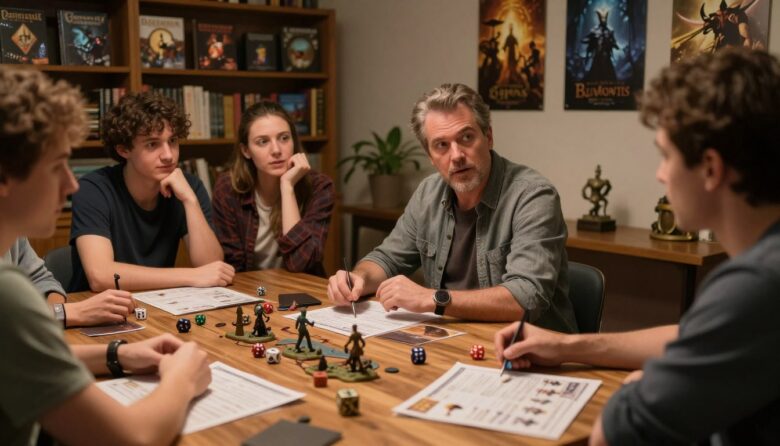
I still remember the session my players decided to ignore the haunted castle and open a bakery instead. My entire campaign plan was out the window. In that moment, I learned that the best game master isn’t the one with the perfect script, but the one who can adapt.
This happened because tabletop role-playing is a shared story. Your friends will always surprise you. Being ready for that surprise is what separates a good game from a great one. You need a toolkit for on-the-fly creativity.
Mastering this skill turns a problem into your best tool. It builds a living world that reacts to your group’s ideas. Your players feel truly heard, and you spend less time prepping plots that might never be used.
The best part? Anyone can learn it. This guide breaks down the tips and mindsets that helped me. We’ll cover how to prepare to be flexible and how to react in the moment to keep the story moving.
Think of it as a practical handbook for GMs of every level. Your next unforgettable campaign moment might start when your character does something totally unexpected. Let’s make that moment fun for everyone.
Key Takeaways
- Player choices will inevitably diverge from prepared plots, and that’s a feature, not a bug.
- Improvisational skills transform unexpected events into opportunities for deeper, more memorable storytelling.
- A flexible Game Master can significantly reduce preparation time while increasing player engagement.
- On-the-fly creativity is a learnable skill, not an innate talent reserved for a few.
- This resource provides actionable strategies for both preparing for and reacting to derailed moments in play.
- Embracing improvisation leads to a more dynamic and collaborative game world.
- The ultimate goal is to ensure every session remains enjoyable and driven by shared creativity.
Why an RPG Improvisation Guide is Your Best Gaming Tool
Consider the last time your friends took a left turn you never saw coming. In that moment, you needed one core skill: the ability to make things up to solve a new problem. This on-the-spot creativity is vital for tabletop gaming.
It transforms a derailed plan into your session’s most memorable moment. This tool lets you build a living, breathing story with your players, not just for them.
Think of strong improv as your secret weapon for a better experience. It’s not about having no plan. It’s about having a flexible framework to adapt.
The benefits are clear and powerful:
- Reduces Stress: You stop fighting the chaos and start guiding it. This makes the entire game more fun and relaxed for you, the master of ceremonies.
- Keeps the Story Moving: You can think on your feet. This means no awkward pauses. The action and drama flow without breaking your group’s immersion.
- Builds a Believable World: When you create characters and locations on the fly, the world feels reactive. It grows organically from your group’s play and ideas.
I know this can feel scary. The fear of blanking is real. But this isn’t a talent reserved for a few.
It’s a skill anyone can develop with the right mindset and practice. Paying attention to your friends’ cues is the first step.
An effective guide to this way of thinking is invaluable. It helps you turn those chaotic surprises into the highlights of your campaign. Your players will remember the spontaneous tavern brawl or the quirky merchant for years.
That’s the power of mastering this tool. It elevates your entire gaming experience.
Preparation: Your Secret Weapon for Seamless Improv
True freedom during a session doesn’t come from an empty notebook, but from one filled with flexible tools. The best on-the-spot creativity is fueled by smart preparation. Think of it as building a reservoir of content you can tap into the moment your group goes off-script.
This way of working turns preparation from a chore into your greatest asset. You stop fearing the unexpected and start welcoming it.
Build a Toolkit of Modular Encounters and Locations
Instead of scripting a linear plot, prepare standalone pieces. Create a bandit camp, a mysterious ruin, or a quirky shop. Leave the specific details vague.
You don’t need to know every room in the temple yet. Just know its core idea and potential rewards. This lets you drop it into any place that makes sense.
For example, a “haunted cellar” can be under a city tavern or a forest cottage. The characters and monsters might change, but the spooky atmosphere remains. This modular way saves hours of work.
Your campaign gains depth because you can react to your party‘s interests instantly. If they love political intrigue, your generic “noble’s estate” becomes a hub for it.
Keep Lists for On-the-Fly Needs
When your players ask for a random blacksmith’s name, you don’t want to pause. That’s where lists become your best friend.
I keep several ready to grab:
- Names: Dozens for every culture in my world.
- Monsters & Items: A shortlist of stats and simple descriptions.
- Plot Hooks: One-sentence prompts like “a letter begging for help.”
This thing saves immense mental energy. I once had a party decide to interrogate every guard in a town. My name list let me create distinct characters on the fly.
The social encounter kept moving and felt alive. Without that list, I would have stalled. Preparation here is about speed and reducing friction.
Define World and NPC Motivations
The deepest part of prep isn’t maps or stats. It’s understanding how your world works and what its people want. This knowledge is your compass for any improv decision.
Ask yourself two big questions:
- What are the core rules of my setting? (e.g., magic is rare and feared).
- What do my major factions and typical NPCs desire? (e.g., the merchants’ guild wants stability and profit).
With this foundation, you can invent any npc on the fly. A city guard isn’t just a stat block. She’s a person who wants to finish her shift safely and maybe earn a promotion.
Her reactions to the group will flow from that desire. This makes every interaction feel real and consistent. It turns random characters into memorable parts of the story.
Good preparation is broad, not deep. It gives you reusable assets and a clear framework. You set yourself up for success, ready to build the game together in the moment.
The Illusion of Choice: What Your Players Don’t Know
The map in your notes doesn’t have to be the map in your players’ minds. This is one of the most powerful tools you have. Your friends only know the world through what you describe.
This isn’t about tricking them. It’s about creating a seamless game where their choices feel meaningful and the story holds together. You can honor their freedom while gently guiding the campaign.
The illusion of choice makes this possible. Your group decides to go east instead of west. The planned town is suddenly in the east. They never know the difference.
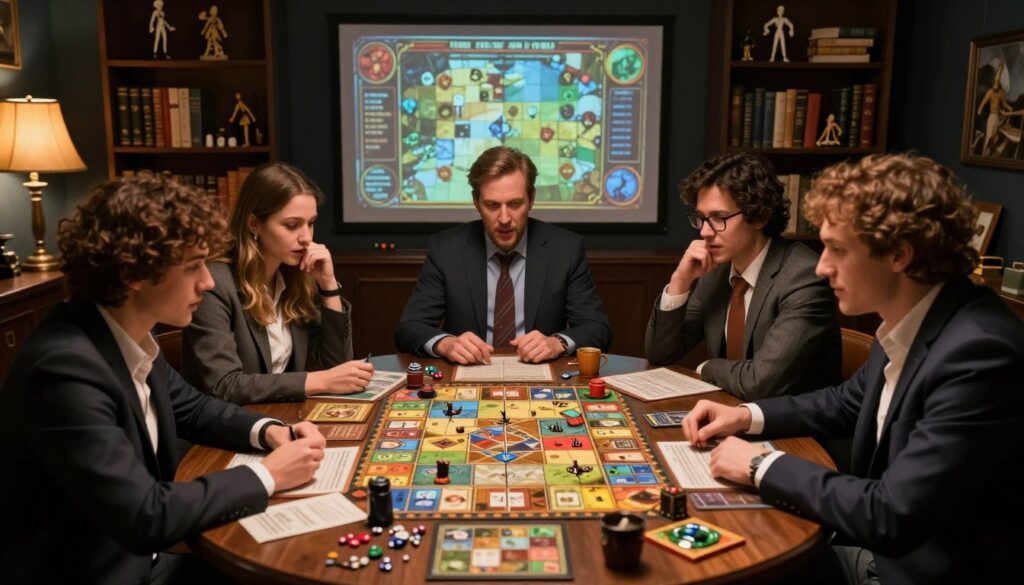
This approach saves so much time and stress. You reuse your best ideas instead of throwing them away. Your players get to explore, and you get to keep the story on track.
Let’s break down how it works in practice.
Mastering Flexible Geography
Never show your players a complete map. Give them a version with key landmarks and blank spaces. If they head into an unknown area, you decide what’s there.
That haunted forest you prepared? It can be north, south, or east of their current place. The geography in your head is fluid. This lets you dictate the pace without saying “no” to their plans.
Your party feels like pioneers. You know you’re placing engaging content right in their path. Everyone wins.
Relocating People and Events
The same logic applies to people and plots. The quest giver looking for a lost relic doesn’t live in one specific city. He appears in the first settlement your group visits.
The key encounter you designed happens in the next logical location. Your players believe they found it through their own actions. You know you adapted your plan to their route.
This keeps the momentum going. There are no dead ends or wasted sessions.
The Ethical Line
This technique must build trust, not break it. The goal is to enhance their experience, not to make their decisions meaningless.
Avoid the “quantum ogre” trap—where every path leads to the exact same fight. Use your flexible content to react to their choices, not replace them.
If your party cleverly avoids a region, don’t force the conflict elsewhere. Sometimes, letting them skip things is the right call. Use this tool to enable fun, not to control every outcome.
| What the Players Perceive | The GM’s Flexible Reality |
|---|---|
| “We chose to explore the eastern swamp.” | The swamp is where you placed the prepared lizardfolk lair. |
| “We found the mysterious hermit in this village.” | The hermit’s hut was a modular location ready to drop anywhere. |
| “Our decision to help the merchant led us to the secret cave.” | The cave entrance was attached to that quest hook from the start. |
| “The world feels huge and full of possibilities.” | Key locations and NPCs are mobile, ensuring they find the good stuff. |
I once planned a dungeon in a mountain pass. My party decided to travel by river. Instead of scrambling, I moved the dungeon entrance to a seaside cliff.
The players were thrilled with their “discovery.” They never suspected a thing. The session was a blast, and my preparation wasn’t wasted.
This method reduces your workload dramatically. You prep less because you reuse more. The anxiety of going off-script vanishes.
You become a confident master of ceremonies, ready for anything. Your campaign gains a magical sense of cohesion.
Remember, the illusion of choice is a collaborative tool. It helps you build a better game for everyone at the table. Your players feel smart and impactful, and you deliver a smooth, engaging story.
Mastering the Moment: How to React to Your Players
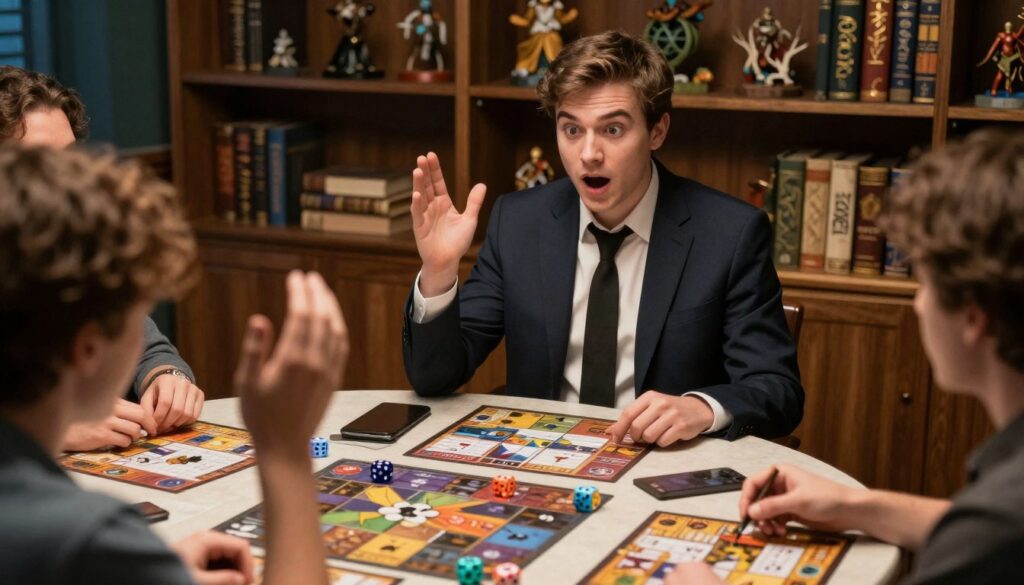
When a player leans forward and asks something you never planned for, that’s your cue to create something amazing together. Your in-the-moment reaction is the engine of a collaborative story. It turns a potential roadblock into the session’s highlight.
This skill is about more than just thinking fast. It’s about engaging your players as partners in building the scene. The right response makes them feel brilliant and invested.
Embrace “Yes, And…” and Build on Ideas
The golden rule from theater is your best friend here. “Yes, and…” means accepting a player‘s contribution and adding to it. You validate their idea and expand the fiction.
For example, if a character asks, “Do I recognize this strange symbol?” don’t just say no. Say, “Yes, and it reminds you of a cult mentioned in an old book. Roll History to see what you recall.” You built a plot hook from a simple question.
This principle applies to actions, too. If a player wants to swing from a chandelier during a fight, say yes. Then add the consequence: “And as you land, the rotten beam cracks. Give me a Dexterity save.” The game becomes more dynamic and fun.
Your mindset shifts from gatekeeper to co-creator. You’ll find your players offer more creative solutions, knowing you’ll run with them.
Listen Actively for Clues and Inspiration
Great on-the-fly creation starts with listening. Pay close attention to what your friends say—and what they don’t. Their theories and offhand comments are pure gold.
Watch their body language. Are they excited about a particular NPC? Do they seem suspicious of a location? That’s your signal to develop that element further.
I once had a player joke, “I bet that mercenary works for the thieves’ guild.” It was a throwaway line. I listened, nodded, and later revealed it was true. That spawned an entire faction storyline they felt they discovered.
Use phrases to draw them out. Ask, “What does that look like when you do it?” or “Tell me what your character is thinking.” Their answers give you rich material to weave back into the story.
Know What to Avoid: Metagaming, God Mode, and Power Gaming
For collaborative improv to work, everyone needs to play within the spirit of the game. Certain behaviors break the shared illusion and make your job harder.
Metagaming is using out-of-character knowledge. A player shouldn’t act on info their character wouldn’t know. Gently remind them to separate player knowledge from character knowledge. This keeps the scene honest.
God Mode is when a character is made invincible or all-powerful, ignoring the rules. It kills tension and makes stories boring. The rules and challenges give the story its stakes.
Power Gaming is prioritizing stats and optimization over narrative and teamwork. It can make others at the table feel sidelined. Encourage choices that serve the story and the group’s fun.
Of course, you set the tone. If you follow the rules and focus on collective storytelling, your players will likely follow your lead.
Mastering these reactions transforms every session. You stop fearing the unexpected and start seeing it as your best source of material. Your players‘ contributions become the fuel for a living, evolving world that you build together, moment by moment.
Reuse, Recycle, and Reinvent Your Content
The smartest Game Masters I know have a secret: they rarely create anything completely new. Instead, they become experts at reusing, recycling, and reinventing what they already have. This is a powerful strategy that saves immense time and makes your world feel deeply connected.
Think of your unused ideas not as wasted effort, but as a treasure trove for future sessions. When your party bypasses a dungeon or ignores an NPC, that content isn’t lost. It’s simply waiting for its moment in a new context.
This approach builds narrative continuity effortlessly. A minor character from three sessions ago reappears with new information. A strange symbol spotted in a campaign‘s first arc becomes vital later. Your players will think you planned it all along.
“Creativity is just connecting things,” Steve Jobs once said. Your job is to connect the things in your notes in new and exciting ways.
How to Repurpose Your Best Material
Start by looking at your notes for unused encounters or locations. That bandit camp your group avoided can be easily reinvented. Change its context and it becomes a fresh experience.
For example, the same map and stats can represent a cultist outpost or a mercenary safehouse. Just describe it differently. The characters inside have new motives, but your prep work is done.
Bring back favorite people from earlier in the story. A helpful merchant they liked could need their aid later. This makes the world feel alive and reactive to their actions.
Even a simple magic item can evolve. A dagger found at level 2 might later be revealed as a key to an ancient seal. A minor detail becomes a major plot point.
A Personal Story of Smart Recycling
I once designed a complex goblin dungeon. My party decided to negotiate with the tribe instead of fighting. The dungeon went unused.
Weeks later, the players made enemies of a rival adventuring party. I needed a secret base for these rivals. That unused goblin dungeon was perfect. I changed the inhabitants and decor, but the layout was ready.
My group was thrilled to “discover” this hidden lair. They never knew it was recycled content. The session was a hit, and my prep time from weeks prior finally paid off.
The Benefits of a Circular Creative Economy
This way of working has clear advantages for any master of the game:
- Saves Your Sanity: You stop prepping so much new material every week. Your mental load decreases.
- Builds a Cohesive World: Recurring elements make your campaign feel interconnected and planned.
- Reduces Creative Waste: Your hard work gets used, even if not in the way you first imagined.
- Makes You Look Brilliant: Your players will marvel at your foresight when old threads resurface.
Smart reuse is a hallmark of an experienced Game Master. It’s not about being lazy. It’s about being efficient and building a rich, lived-in world without endless new creation. Your story gains depth, and your gaming experience becomes smoother for everyone at the table.
Staying Organized and Giving Yourself a Break
My notes after a chaotic session used to look like a tornado hit a dictionary. Names, places, and plot hooks were scattered everywhere. I quickly learned that brilliant on-the-fly ideas are useless if you forget them by next week.
Staying organized is the unsung hero of smooth improv. It frees your mind to create in the moment. Giving yourself a break is the other essential part. Together, they make running a long-term campaign sustainable and deeply fun.
Your In-Session Note-Taking Toolkit
Jotting things down during play is non-negotiable. The goal isn’t perfect prose. It’s capturing key details that will matter later.
I keep a simple bullet list. I write the npc name I invented, one character trait, and maybe a plot hook. For example: “Grimshaw the guard – hates elves, knows about smuggler’s tunnel.” That’s it.
This takes the pressure off your memory. You can focus fully on the current scene. When your players return to that place three sessions later, you have your notes.
The tool you use is a personal choice. The right way is the one you’ll actually use.
| Method | Best For | Key Advantage |
|---|---|---|
| Physical Notebook | GMs who think better with pen and paper; quick sketching. | No digital distractions; fast, tactile access during the game. |
| Digital Note Apps (OneNote, Notion) | Organizing large campaign wikis; searching notes instantly. | Easy to reorganize, link entries, and access from any device. |
| Dedicated GM Tools (Lore, Tome) | GMs who want structure built for tabletop games. | Pre-built templates for npcs, locations, and plots keep things coherent. |
| Voice Notes | Capturing thoughts during natural breaks without stopping play. | Extremely fast; lets you keep your attention on the group. |
The Power of Strategic Pauses
You don’t have to have every answer immediately. Use the natural rhythm of the game. When your party is deep in planning or dividing loot, that’s your time.
Take a mental step back. Think about the next logical problem or place. This quiet moment of prep is a lifesaver.
If you’re truly stumped, it’s okay to pause. Say, “That’s a fantastic question. Give me a moment to think it through.” Your players will appreciate the consideration. It’s better than a rushed, weak answer.
Calling for a short bathroom or snack break is a valid tool. Use that five minutes to regroup. A clear mind makes better creative decisions.
The Post-Session Ritual
The real organizational magic happens after your friends leave. Spend 15 minutes while the session is fresh. Turn your bullet points into coherent notes.
Add the new npc to your world document. Flesh out that improvised location. This builds your growing campaign bible.
This habit does a lot. It ensures consistency. It turns random people into recurring characters. Most importantly, it drastically reduces your prep time for the next session.
You start with a foundation of what actually happened, not what you hoped would happen.
Recharge by Becoming a Player
One of the best ways to improve and stay inspired is to step to the other side of the screen. Join a game as a player.
This experience is invaluable. You see how your rules and style affect others. You learn new techniques from a different master. You get to just enjoy the story without the responsibility of running it.
It recharges your creative batteries. You return to your own campaign with fresh ideas and renewed energy. Of course, it’s also just plain fun to play.
Staying organized and allowing breaks aren’t signs of a struggling GM. They are the marks of a smart, sustainable master. They protect your most important gaming skill: your joyful creativity.
Your group gets a more consistent, rich world. You get to run amazing sessions without burning out. That’s a win for everyone at the table.
Conclusion: Your Journey to Becoming an Improv Confident GM
Your greatest strength as a GM isn’t knowing every answer, but trusting yourself to find them. This journey from planner to adaptable storyteller is about building a vital skill.
Start small. Try one new technique in your next game. See how it deepens the collaborative experience for your group.
Remember, even mistakes often create the best campaign memories. For practice, watch actual play videos or join a party as a player.
You now have the way of thinking and tools to handle any surprise with creativity. Go build amazing games and have fun.
FAQ
My players completely ignored my main quest. What should I do first?
How can I prepare to improvise without writing a whole new campaign?
What’s the "illusion of choice" and how do I use it fairly?
How do I handle a player who wants to break the game or be all-powerful?
I invented a cool NPC on the spot. How do I remember them for next time?
What’s the best way to get better at thinking on my feet during a session?
I feel overwhelmed when the game goes off my notes. Any quick tips?

Dr. Silas Raven is a lifelong world-builder and narrative architect with a PhD in Mythological Structures. Dedicated to the art of the ‘deep dive,’ he founded Ravenous RPG to help Game Masters and players move beyond the basics. Whether he’s dissecting complex mechanics or weaving intricate lore, Dr. Raven’s mission is simple: to provide the sustenance every tabletop enthusiast needs to build unforgettable campaigns.