Welcome to the exciting and sometimes intimidating journey of creating your own tabletop roleplaying universe from the ground up. I know that feeling of staring at a blank page. It can be overwhelming, but having a clear path makes all the difference.
In this personal guide, I’ll walk you through my step-by-step method for crafting a rich, playable setting. We’ll focus on what you actually need to start your first session, not on details that can wait.
I believe 2026 is a transformative time for this creative process. The best approach now is highly collaborative, involving your players from the very beginning.
A major myth is that you must map out an entire planet’s history and geography before play begins. I’m here to show you why starting small is the secret to sustainable and inspired creation.
Letting go of the need to control every detail leads to a more dynamic and engaging setting. Your universe will grow organically through play, which is far more rewarding.
This guide is your blueprint. It combines timeless principles with forward-thinking techniques to help you build a place that feels truly alive and uniquely yours.
Whether you’re preparing your very first game or are a seasoned Game Master looking for a refresh, my goal is to give you practical, actionable advice you can use right away.
By the end, you’ll have a clear plan for sketching a local map, populating a starting town, and seeding it with hooks that will grab your players’ imaginations.
Key Takeaways
- Start small with a focused, local area instead of an entire planet.
- Involve your players in the creation process for a more collaborative and engaging experience.
- Focus on developing only the details necessary to begin your first gaming session.
- Allow your setting to evolve organically through play, rather than planning everything in advance.
- Use practical tools and questions designed to spark creativity, not stifle it.
- This method is designed for both first-time and experienced Game Masters looking for a fresh approach.
1. Shifting Your Mindset: Worldbuilding Doesn’t Mean Building a Whole World
Forget the sprawling epic for a moment. The most vibrant settings often grow from a single, well-tended seed.
The biggest mistake I see is trying to craft a fully realized planet before the first dice roll. This leads straight to creative burnout. It also creates a bland, static place.
My approach is different. I start incredibly small. Think of your initial creation as a single, detailed playground.
The “Start Small and Expand” Philosophy
Your players can only be in one location at a time, especially at the beginning. So, your “campaign environment” might just be a town and the woods around it.
You don’t need to name a neighboring king or map distant seas yet. Focus on what’s right here. This is the core idea.
Begin with a local area of a few hexes or a single valley. Detail that space. Let everything else be a mysterious blank on your map.
This way of working builds a strong foundation. Your universe can then grow in any direction the story goes.
What You Need Now vs. What You Can Figure Out Later
A crucial skill is knowing what to define immediately and what to leave undefined. This distinction saves your sanity.
Your energy should go into the elements that will impact your first few sessions. Everything else is a question for future-you.
| Focus On This Now | Save This For Later |
|---|---|
| The overall theme or mood of your starting land | International politics and trade routes |
| Dangerous monsters and sites near the town | The name of the emperor three continents away |
| Key local NPCs, like the innkeeper or town guard | Ancient creation myths and full pantheons |
| A local deity or power the people revere | The complete history of the last millennium |
| Immediate problems and rumors | What lies beyond the distant mountains or seas |
This table isn’t about ignoring big fantasy ideas. It’s about sequencing them. You figure out the epic things when they become relevant.
Your Campaign is a Playground, Not a Novel
I often remind myself that my game is a collaborative playground. It’s not a pre-written novel I’m forcing my friends to read.
This mindset shift is everything. It frees you to be flexible and responsive to player choices.
Your goal isn’t to write a textbook. It’s to create a sense of place and possibility. You want your group to lean in and ask, “What’s over that hill?”
By focusing on a manageable area, you reduce prep time dramatically. More importantly, you increase your own excitement.
You get to discover new parts of the setting alongside your players. This makes the world feel dynamic and lived-in.
Embracing this perspective is the first, most important step. It turns an overwhelming task into an enjoyable, sustainable creative process from scratch.
2. Why 2026 is the Year of Collaborative World Building
The most exciting evolution in our hobby right now isn’t about new rules, but about who holds the pen. For years, the default was a solitary process. I’m convinced that’s changing for good.
2026 will be a landmark year for how we build our shared spaces. We’re moving firmly away from the “lone genius” model.
The future is a truly collaborative, shared storytelling experience. This shift makes our games more vibrant and personally meaningful.
From DM’s Sole Domain to Shared Storytelling
Your screen shouldn’t be an impenetrable barrier. Think of it as a portal for player ideas. It enriches the setting in ways you couldn’t imagine alone.
Collaborative worldbuilding is simply creating the place with your group. You guide the framework, and they help paint the details.
This method turns lore from a monologue into a conversation. A great example comes from Game Master Brennan Lee Mulligan.
He once asked his players: “Describe one thing that would make a stranger fall in love with this place.”
That single question generates immediate, emotional depth. It’s a perfect starting point.
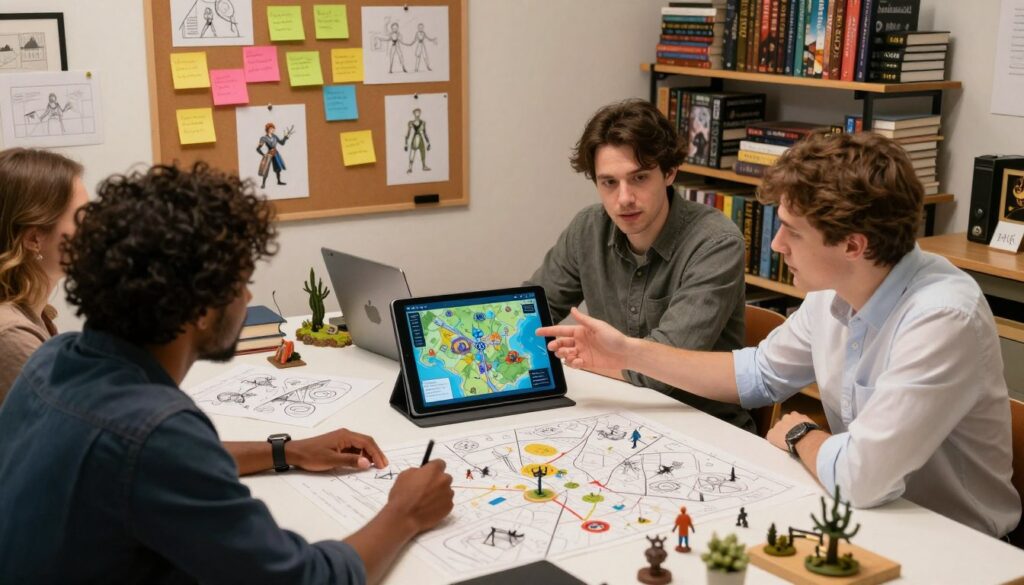
Your players become co-authors of the history and culture. Their contributions make the setting feel owned by the entire table.
The Win-Win: Deeper Player Investment and Less Burnout for You
The benefits here are undeniable. It’s a complete win-win scenario for everyone involved.
When players help shape the lore, they develop a deeper investment in the story. They care about the history because they helped write it.
This leads to characters with organic connections to the places they explore. Their backstories intertwine with the setting’s fabric naturally.
For you, the Game Master, it means avoiding the fatigue of solo creation. You share the creative load, which prevents burnout.
The plot hooks you design are guaranteed to resonate. They’re built on a foundation your group helped lay.
This collaborative foundation turns your players’ ideas into pillars of the campaign. It ensures their buy-in from the very first session.
How to Introduce the Idea to Your Group
Introducing this concept doesn’t have to be awkward. With a low-pressure approach, it can feel natural and incredibly fun.
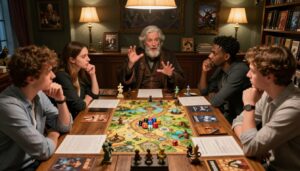
The best time is during a dedicated Session Zero. Frame it as a creative brainstorming session, not a homework assignment.
Start with simple, structured exercises. Ask each person to contribute one vivid detail about the starting town.
You can also use dedicated tools like the Deck of Worlds card deck. These facilitate the process with inspiring prompts.
My personal favorite technique uses a phased approach. First, brainstorm what fictional worlds have immersed your players.
Then, discuss the story elements that made them feel something. Weave those beloved ideas directly into your map and lore.
This isn’t about giving up control. You’re gaining creative partners. They make your job more sustainable and your shared universe more alive.
By the end of this process, the details your players help create become the heart of your adventures. You’re all building it together, one idea at a time.
3. Your Step-by-Step Blueprint for TTRPG Campaign World Building
I’ve distilled my process into a clear, four-step method. It turns a blank page into a vibrant adventure hub. This is the exact framework I use to create engaging locales for my players.
We’re moving from philosophy to hands-on creation. Each step builds on the last. You’ll go from an empty map to a living, breathing campaign world ready for exploration.
This blueprint is designed for action. It focuses on what you need to start your first session. Let’s begin building your unique setting from the ground up.
Step 1: Sketch Your Local Map (The “Overland Hex”)
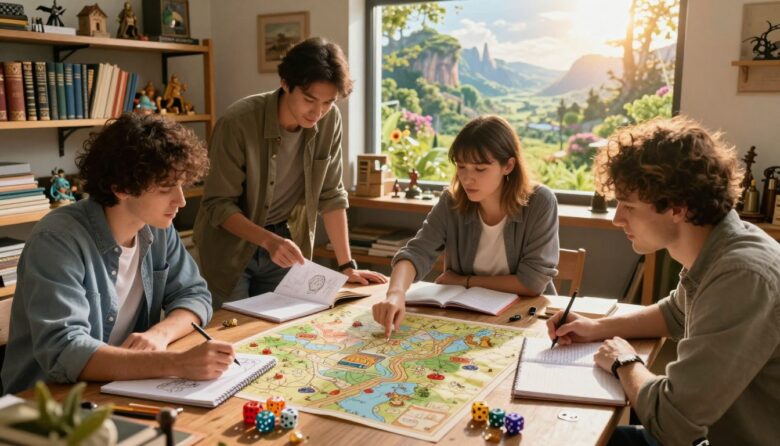
Your first task is to define a small, playable region. I always start with an overland hex map. It makes tracking travel distances incredibly easy.
Draw 7 to 10 hexes. Make each hex represent about six miles of land. This creates a local area of roughly 40 to 60 miles across.
Fill these hexes with varied terrain. Think dark woods, rugged mountains, and rolling grasslands. Variety sparks different types of adventure.
Now, add a few intriguing landmarks. A solitary standing stone, a mysterious waterfall, or a crumbling watchtower works perfectly. These landmarks beg for exploration.
You can even use a dice method for random geography. Roll for terrain type and a minor feature. This injects surprise into your own creative work.
The goal isn’t a masterpiece. It’s a functional sketch that answers a key question: “What’s around here?” This map is your playground’s border.
| What to Define in Your Hex Map | What to Leave for Later |
|---|---|
| The dominant terrain in each hex (forest, hill, swamp) | The exact political borders of nations |
| 1-2 obvious landmarks or points of interest | Detailed climate patterns for the entire continent |
| General travel difficulty (easy, hard, dangerous) | The complete geological history |
| Potential lairs for local monsters | Names of every river and hill |
| One strange natural phenomenon | Trade economies of distant cities |
Step 2: Design Your Anchor Town
Every starting area needs a heart. This is your anchor town. It’s the safe haven your players will return to again and again.
I envision a small community of about 500 souls. It’s large enough to have essential services. Yet it’s small enough for everyone to know each other’s business.
Flesh out three to five key locations. The tavern, the blacksmith, the general store, a temple, and maybe a quirky magic shop. Give each a distinct feel.
Now, populate these places with NPCs. The innkeeper with a secret past. The blacksmith who needs rare ore. The town guard captain investigating strange noises.
Each character should have a simple need, fear, or secret. These become instant plot hooks. Your players will naturally engage with personalities, not just faceless vendors.
A great piece of advice I follow is from game designer Sly Flourish: “Give every NPC a name, a desire, and a secret.” That’s all you need to start.
This town isn’t just a backdrop. It’s a community with problems only heroes can solve. Design it to drive the story forward from day one.
Step 3: Seed Adventure Sites and Connect the Dots
With a map and a town, you need places to explore. Seed a few adventure sites within your hexes. Two or three are plenty to begin.
Classic sites include a deserted mine, a ruined tower, or a haunted forest glade. These are your dungeons and lairs.
Here’s the crucial part: connect each site to the people and problems in your town. The mine is where the blacksmith’s ore vanished. The ruined tower is the source of the guard captain’s strange noises.
This creates a web of potential quests. Every location has a purpose. Every NPC has a connection to the wider setting.
You don’t need to create every site from scratch. Adapting excellent pre-written content is a brilliant time-saver. Drop a published dungeon into your homebrew valley and re-skin the monsters.
This adds professional polish to your game. It lets you focus on weaving the site into your local lore. Your players will never know the difference.
Step 4: Breathe Life Into It Through Play
The most important step is to start playing. All your preparation exists to facilitate this moment. Present the hooks from your town and map.
Then, let your players’ choices dictate what happens next. Which rumor do they follow? Which location do they explore? Their interest tells you what to develop further.
I use simple random tables during play. A table for travel encounters, one for town events, another for strange discoveries. This keeps the world feeling dynamic and unpredictable, even for me.
Rumors are your best tool. Let the innkeeper share three pieces of gossip. One is true, one is exaggerated, one is completely false. Watch your players debate which to believe.
This blueprint is iterative. You’re not building a static theme park. You’re cultivating an environment that evolves session by session.
Your campaign grows organically in the directions your group cares about. This method ensures your prep is always focused. Your setting becomes cohesive and alive through play.
By following these steps, you build world with purpose. Every detail serves the story you’re telling together. Now, you’re ready to start your first game.
4. Fleshing Out Your Starting Area: NPCs, Secrets, and Sense of Place
Now comes my favorite part: transforming your sketches into a place that feels truly lived-in. A map and a list of locations provide the structure, but the sense of place comes from the people who inhabit it and the whispers that float through its streets.
This is where a generic backdrop becomes a campaign world your group will remember. We’ll add layers of depth that encourage interaction and care.
Creating a “Roster” of Memorable NPCs
Instead of inventing characters on the spot, I build a reusable roster. This is a list of 10-15 personality blurbs I can plug in anywhere. It saves me from panic and ensures every face has a spark.
The key is to give each person a clear desire and a personal secret. This creates instant potential for story. The blacksmith doesn’t just sell swords; she desperately needs a rare ore to fulfill a legacy promise.
The guard captain isn’t just a patrolman; he secretly visits a haunted glade to leave offerings for a lost love. These details turn NPCs into potential plot hubs.
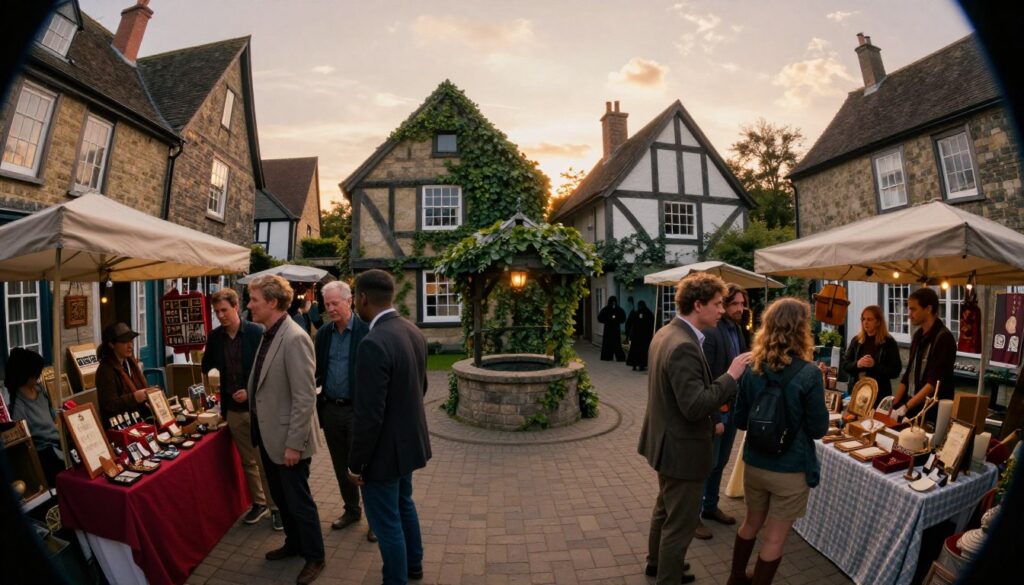
Here’s a sample roster to show you how little you need to start. Keep your notes just like this—short and evocative.
| Name & Role | Desire or Goal | A Secret |
|---|---|---|
| Elara, the herbalist | To find a legendary bog mushroom for a cure. | She is secretly feeding information to a druid circle outside of town. |
| Borin, the half-orc bartender | To create a safe haven for outcasts. | A sizable bounty is on his head from a distant city. |
| Captain Veldrin, town guard | To uncover the source of strange nighttime sounds. | He leaves weekly offerings at a mysterious stone cairn. |
| Miri, the cheerful street urchin | To earn enough coin to buy a real home. | She has a perfect map of all the roof access points in town. |
| Old Man Thistle, the reclusive historian | To prove the local barrow mounds are not tombs, but prisons. | He possesses a rusted key that fits no lock in the valley. |
Asking the Right Worldbuilding Questions About Your Town
A handful of pointed questions can generate more compelling content than hours of unfocused work. I use these prompts to quickly flesh out my starting locations.
Answering them builds internal logic and reveals natural conflicts. This makes your setting feel coherent and ripe for adventures.
- Who holds real power here? Is it the elected mayor, a merchant guild, or a hidden cult?
- What authority protects it? A paid guard, a citizen militia, or a single, aging knight?
- Where do basic resources come from? Does the town import grain, or is there a struggling local farm?
- Why would this place need adventurers? Are monsters encroaching, or is a trade route blocked?
- Which tavern is the favorite, and why? Good ale, fair games, or the best gossip?
- How do most travelers arrive? By river barge, mountain pass, or a dangerous forest road?
These elements form the history and daily life of your community. They tell you what the people value and fear.
Planting Rumors and Local Secrets
Gossip is the lifeblood of any fantasy setting. I use rumors to guide my players without forcing them down a single path. They offer clues, red herrings, and reasons to investigate.
Rumors are a key source of information in a fantasy world; not all need to be true, but they bring the world to life and guide players without forcing them.
I love presenting three rumors in a session. One is mostly true, one is exaggerated, and one is completely false. This makes players debate and choose their leads.
Your NPC roster and town questions are the perfect sources for these snippets. The herbalist’s search for a mushroom becomes a rumor about a “wishing fungus” in the swamp.
Old Man Thistle’s theory about the barrows sparks a tale of “restless ghosts.” These things make the environment feel deep and interconnected.
By fleshing out these details, you give your players a rich sandbox. They can pull on any thread they find interesting. This leads to organic roleplaying and player-driven plot.
The goal isn’t to write a novel. It’s to provide just enough spark for your characters—and your group’s imagination—to ignite the story together.
5. Tools and Techniques to Keep Your World Growing Organically
Your setting’s long-term health depends on a simple principle: prepare only what you need, and let play fill in the rest. As your story progresses, you’ll need a toolkit to support this organic growth.
My favorite methods respect your prep time while making the environment feel alive. They turn long-term creation into a fun, collaborative puzzle.
Using Random Tables for Encounters and Events
Random tables are not old-school relics. They are powerful tools for spontaneity. A well-crafted table makes your land feel unpredictable and consistent.
An encounter table does double duty as subtle storytelling. The probabilities you set imply lore about ecology and danger.
Consider a table for a “West Moorland Road.” The results tell a story.
| d8 Roll | Encounter | What It Implies |
|---|---|---|
| 1-4 | No encounter | The road is relatively safe for travel. |
| 5 | Merchant caravan | Commerce exists, but it’s risky. |
| 6 | Orc raiding party | Local tribes are aggressive and organized. |
| 7 | Troll | Apex predators stalk the moors. |
| 8 | Hill giant | Truly monumental dangers wander here. |
You see the history and politics without a lecture. Use tables for weather and strange events too. They inject life between major plot points.
Adapting Pre-Written Resources for Your Homebrew
I am a huge advocate for using published content. There is no shame in adapting a fantastic adventure for your homebrew game.
This way saves you immense time and adds professional depth. You can drop a complete dungeon into your valley and re-skin the monsters.
Your players will never know the difference. You can also borrow lore from established settings. Integrate a city or a pantheon that inspires you.
This technique lets you focus on weaving new elements into your local setting. It is a brilliant shortcut that polishes your game.
Letting Player Choices Dictate the Next Horizon
The most important technique is listening. Pay close attention to what your characters are curious about. Develop those areas next.
This “build as you go” idea means you always prepare content that will be used. Your players feel like true explorers shaping the map.
Listen to their theories between sessions. Those questions are golden opportunities. You can steal their best ideas and weave them back into the world.
Your players’ curiosity is the best guide for what to develop next. Their questions reveal what they find compelling.
If they speculate about the ruined tower’s original owner, make that your next adventure hook. This approach creates a sustainable cycle of creation.
You combine randomness for spontaneity with curated resources for depth. Player feedback provides the direction. Together, these tools can fuel years of engaging games.
My goal is to equip you with a toolkit. It makes long-term worldbuilding feel like a creative puzzle, not a daunting homework assignment.
Conclusion
The true magic of crafting a setting isn’t found in endless notes, but in the moments it comes alive at your table. I hope this guide has shown you that creating a compelling place for your stories is an achievable and thrilling project.
Remember, the heart of success lies in starting small. Focus on a rich, playable area rather than an overwhelming whole. By seeing your creation as a shared playground and involving your group, you build a foundation of excitement.
Use the step-by-step blueprint as your flexible way forward. Trust in the process of building through play. Some of the best plot twists come from player choices. Don’t be afraid to adapt amazing content from others.
Ultimately, your world is a backdrop for unforgettable adventures with friends. Keep the focus on fun and collaboration. Take these ideas, make them your own, and start creating. Your unique stage is waiting.
Thank you for joining me on this deep dive. I can’t wait to hear about the amazing things you and your players create together.
FAQ
How much of my setting do I need to build before we start playing?
How do I get my players to help build the world with me?
What’s the very first thing I should create?
How do I make a town feel real and lived-in?
Can I use published adventures in my own original world?
How do I keep my world growing without getting overwhelmed?

Dr. Silas Raven is a lifelong world-builder and narrative architect with a PhD in Mythological Structures. Dedicated to the art of the ‘deep dive,’ he founded Ravenous RPG to help Game Masters and players move beyond the basics. Whether he’s dissecting complex mechanics or weaving intricate lore, Dr. Raven’s mission is simple: to provide the sustenance every tabletop enthusiast needs to build unforgettable campaigns.