
A compelling campaign world does not need an atlas, a complete pantheon, or thousands of years of history. It needs places the characters can affect, people with competing priorities, and problems that cannot be solved without making choices.
This guide focuses on building that playable foundation. The examples use a fantasy valley and starting town, but the same process works for a space station, post-apocalyptic settlement, modern city, or any other campaign setting.
1. Define the Campaign Before Defining the World
Begin with the experience the campaign is meant to support. A setting designed for dangerous wilderness exploration needs different preparation from one built around court intrigue or occult investigation.
Write a one-sentence campaign premise that identifies the characters, their likely activity, and the immediate pressure:
The characters are troubleshooters in an isolated valley, keeping the roads open while ancient barrows begin to fail and local factions argue over what should remain buried.
Next, establish three to five setting truths. These are broad facts that help everyone make compatible characters and decisions.
- The valley depends on one unreliable road through the moors.
- Magic is respected but poorly understood.
- The oldest barrows may be prisons rather than tombs.
- Local spirits answer bargains, although the price is rarely obvious.
Also decide the campaign’s tone, technological level, prevalence of magic, expected character activities, and any agreed boundaries around subject matter. These decisions are more useful at the table than a distant empire’s family tree.
Prepare What Can Affect Play
| Prepare Before Play | Leave Undefined for Now |
|---|---|
| The campaign premise and tone | A complete global history |
| The starting area and its immediate dangers | Distant nations with no connection to the characters |
| Several useful NPCs and factions | Every ruler, deity, language, and holiday |
| Three or more actionable leads | Answers to questions nobody has asked |
| Rules assumptions that affect daily life | Detailed economics unless trade is central to the campaign |
Starting locally does not mean the wider world cannot exist. It means distant details remain flexible until they become relevant. If the premise involves international war or royal diplomacy, sketch the major powers on one page, then concentrate detailed preparation on the courts, borders, and agents the characters can actually reach.
2. Decide How Collaborative the Setting Will Be
Worldbuilding can be GM-led, collectively created, or somewhere between the two. A hybrid approach often works well: the GM establishes the premise and maintains consistency, while players contribute details connected to their characters.

During Session Zero, use bounded questions rather than asking players to invent an entire culture without guidance:
- What local landmark does your character recognize immediately?
- Which institution helped or harmed your character?
- What custom from your homeland seems strange to people here?
- Which local NPC already owes your character a favor?
- What rumor has your character heard about the nearby ruins?
- What would make your character want to protect this place?
These answers create useful connections without requiring everyone to enjoy improvisational world design. Players who prefer choosing from options can be offered two or three possibilities instead.
Set Clear Creative Boundaries
Collaborative worldbuilding works best when the group knows who has authority over which details. A player might define their homeland’s funeral custom, for example, while the GM decides what is actually awakening beneath the cemetery.
Record accepted contributions in a shared canon document. This prevents contradictions and distinguishes established facts from ideas that are still provisional.
Not every mystery should be created collectively. Hidden motives, unexplored locations, and uncertain history give the players something to discover. Collaboration should increase investment without eliminating surprise.
3. Draw a Map That Supports Decisions
The right map format depends on the campaign.
- Hex map: useful when distance, navigation, terrain, and wilderness exploration matter.
- Pointcrawl: useful when travel follows known roads, portals, rivers, or routes between important locations.
- District map: useful for urban campaigns in which neighborhoods and local jurisdictions matter more than mileage.
- Relationship map: useful for political or investigative games where connections between people are more important than geography.
Do not use a hex map merely because the campaign is fantasy. If most adventures happen inside one city, a district map and faction diagram will probably produce more useful play.
A Practical Local-Map Recipe
For a travel-focused starting region, place the following:
- One settlement or other reliable base.
- Three routes leading away from it.
- Three adventure sites with visibly different identities.
- One natural obstacle, such as a flooded river or mountain pass.
- One boundary that characters can cross but probably should not ignore.
- One unexplained landmark visible from a distance.
Choose scale according to the game’s travel rules. A six-mile hex may suit a campaign in which characters explore on foot, while mounted travel, airships, starships, or city streets require different units. The important question is not how many miles the map covers, but how many meaningful decisions occur during a journey.
Label only what is commonly known. A ruined watchtower might appear on the map, while the tunnels beneath it remain undiscovered. Blank space is useful when it represents uncertainty rather than unfinished preparation.
4. Build an Anchor Settlement
The starting settlement gives the characters somewhere to gather information, obtain ordinary supplies, form relationships, and see the consequences of their actions. It need not be safe, but it should provide reasons to return.
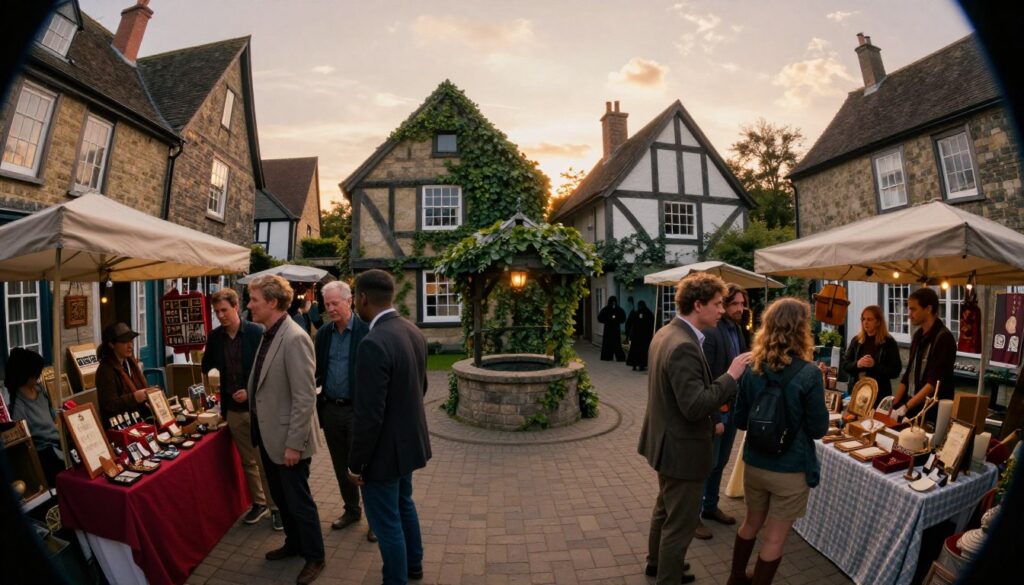
Answer six questions before detailing individual buildings:
- Why does the settlement exist? It may guard a bridge, serve a mine, support pilgrims, or control a trade route.
- What does it need? Food, medicine, labor, protection, information, or access to a blocked resource can all create adventures.
- Who appears to be in charge?
- Who holds power in practice?
- What threatens normal life?
- Why can the authorities not solve that problem without the characters?
Then create three to five locations that support actual play. A tavern may be useful if it serves as a social hub, but it is not mandatory. A frontier shrine, public bath, repair yard, archive, clinic, market, or guildhall may fit the campaign better.
Consider how the game system changes available services. Easy access to magical healing, resurrection, teleportation, advanced surveillance, or automated manufacturing will affect both the settlement and its problems. Do not include such services by habit if they undermine the campaign’s intended pressures.
Create NPCs With Leverage, Not Just Personalities
A usable NPC needs more than a voice or physical quirk. Give each important NPC:
- A role in the community
- A current desire
- Something they can offer or withhold
- A visible mannerism or identifying detail
- A secret, vulnerability, or divided loyalty
The secret should be discoverable and consequential. A fact that can never affect a decision is usually unnecessary preparation.
| NPC | Current Goal | Pressure Point or Clue |
|---|---|---|
| Elara, herbalist | Find a rare bog fungus needed for a cure | She carries messages between the town and a druid circle that opposes further mining |
| Borin, innkeeper | Keep the inn safe for travelers and outcasts | He recognizes newly arrived bounty hunters before they introduce themselves |
| Captain Veldrin, watch commander | Identify the source of sounds beneath the eastern road | Stone dust covers his gloves after private visits to an old cairn |
| Miri, courier | Earn a permanent room and a place in the community | Her rooftop routes give her an excellent view of nighttime activity |
| Thistle, retired archivist | Prove the barrows were built as prisons | A rusted key in his possession becomes warm near one of the sealed mounds |
Connect NPCs to one another. Elara may distrust the watch, Borin may hide Miri from the bounty hunters, and Thistle may need records controlled by the town council. These relationships turn isolated character notes into situations that can change.
Add Two or Three Factions
Factions keep the setting active when the characters are elsewhere. Each needs a goal, a method, and a reason it cannot simply achieve victory.
In the example valley:
- The town council wants the mine reopened before trade collapses.
- The druid circle wants excavation stopped before something buried is disturbed.
- A group of prospectors believes the old tunnels contain a valuable substance omitted from official records.
None has to be entirely correct or villainous. Competing reasonable priorities usually create better choices than a conflict between obvious heroes and featureless enemies.
5. Seed Adventure Sites and Connect Them to the Settlement
Prepare at least three leads so the group has a genuine choice. The associated sites should promise different kinds of play rather than three variations of the same fight.
For each site, define:
- A visible sign: what suggests the site matters?
- An active problem: what is happening now?
- An obstacle: what prevents an easy solution?
- A reward: what can be gained besides treasure?
- A connection: which NPC or faction cares about the outcome?
- A change: what happens if the characters ignore it?
Example Adventure Sites
- The deserted mine: Ore shipments have stopped, but fresh cart tracks appear after rain. Reopening the mine could save the town while violating an old agreement with the druids.
- The barrow field: One mound has cracked open and nearby animals refuse to approach it. Thistle wants evidence, while the council wants the breach sealed quietly.
- The ruined watchtower: A light moves across its upper floor on moonless nights. Miri saw someone carrying town-marked supplies toward it.
Each lead points toward prepared material while leaving the solution open. The characters might negotiate, investigate, retreat, expose a conspiracy, or make the situation worse. Avoid designing a hook that works only if they take one specific action.
Use Rumors as Leads, Not Noise
Rumors are useful when they provide enough information to support a decision. A mixture of truth, misunderstanding, and deliberate deception can make investigation interesting, but too many false rumors teach players to ignore them.
For every rumor, decide:
- Who is spreading it?
- What did that person actually observe?
- Which part is interpretation or exaggeration?
- Where can the characters find confirming evidence?
For example, “ghosts are singing under the eastern road” might come from a frightened traveler who heard rhythmic echoes beneath a cracked milestone. The observation is real even if the supernatural explanation is wrong.
6. Prepare the First Session, Not the Entire Campaign
The first session should introduce the setting through pressure and choice rather than a lecture. Begin with something changing: a caravan is overdue, a sealed mound has opened, an injured scout reaches town, or two factions demand incompatible help.
A practical first-session packet contains:
- A short campaign pitch and the agreed setting truths
- The starting settlement and its essential locations
- Five or six NPCs who can provide information or create complications
- Three clear leads
- One likely adventure site prepared in enough detail to run
- Rules references or statistics for likely hazards and opponents
- A list of spare names for unexpected NPCs
“Enough detail to run” depends on the game. A dungeon-focused system may require a keyed map, encounter statistics, and treasure. An investigative game may need a timeline, clue locations, and NPC motives. A political game may require faction leverage and the consequences of public commitments.
Do not prepare every possible destination equally. Give the players meaningful options, learn which one they intend to pursue, and concentrate the next round of preparation there.
7. Let the World Grow Through Consequences
After each session, update the setting according to what happened rather than returning it to its original state. NPCs remember bargains. Factions respond to losses. Unaddressed dangers advance.
Maintain a short campaign ledger with four sections:
- Established facts: details that have become canon at the table
- Open questions: mysteries raised but not answered
- Changed circumstances: NPC, faction, and location updates
- Player interests: places, theories, and relationships that attracted attention
Player theories are useful evidence of interest, but they do not all need to become true. Preserve clues already established and avoid changing an answer solely to defeat a correct guess. A mystery feels fair when its eventual explanation fits what the group could observe.
Use Clocks for Problems That Do Not Wait
A simple progress track can show what happens if a threat remains unaddressed. A blocked mine might progress through the following stages:
- Ore deliveries stop.
- Workers leave town.
- Prices rise and repairs are delayed.
- The council hires an outside force.
- The outsiders seize control of the mine and surrounding road.
Advance a clock when events justify it, not merely to punish the group for choosing another lead. The purpose is to make the setting responsive and communicate that choices have opportunity costs.
Build Random Tables Around the Setting
Random tables are most useful when every result reveals something about the region or creates a decision. A generic list of monsters may fill time without developing the world.
| d6 | West Moor Road Event | What It Adds |
|---|---|---|
| 1 | An abandoned camp with food still warm | A recent disappearance and a trail to follow |
| 2 | A merchant caravan halted by a broken axle | News, trade, and a request for protection |
| 3 | Floodwater has exposed carved stones beneath the road | A route choice and evidence of older construction |
| 4 | Animals flee east across the travelers’ path | Warning of a nearby disturbance |
| 5 | Armed scouts watch from a ridge before deciding whether to approach | A social encounter that may become dangerous |
| 6 | Enormous footprints cross the road and end abruptly | A mystery without forcing an immediate battle |
Roll only when the outcome is uncertain and an unexpected event would improve the game. Randomness is a tool for discovery, not an obligation.
8. Adapt Existing Material Without Losing Coherence
Published adventures, maps, bestiaries, and prompt tools can reduce preparation. A prompt deck such as Deck of Worlds may help a group generate locations, but any result still needs to fit the campaign’s tone and established facts.
Before placing a published adventure in a homebrew setting, check:
- Purpose: Does it offer the kind of play the group wants?
- System fit: Are its dangers, rewards, and assumptions compatible with the current game?
- Setting fit: Does it depend on gods, factions, or technology that do not exist here?
- Character connection: Why would these characters care?
- Consequences: What will change in the home setting when the adventure is resolved?
Renaming locations is rarely enough. Connect the material to existing NPCs, replace rewards that would disrupt the campaign, and remove lore that leads nowhere. Keep a note of the original source so maps and rules references remain easy to find.
Adapting material for a private campaign is different from republishing it. Anyone distributing a setting or adventure should confirm what the relevant license or permission allows.
Common Worldbuilding Problems
Too Many Proper Nouns
A page full of names is difficult to absorb. Introduce terms when they affect a current choice, and attach each important name to a clear role: the blocked road, the rival guild, the forbidden district.
Lore Without Evidence
If ancient history matters, place evidence of it in the world. Ruined infrastructure, contradictory records, inherited customs, and altered landscapes let players encounter history rather than receive it as a lecture.
Secrets Without Clues
A hidden truth is not playable until characters can notice something that points toward it. Prepare several clues and allow more than one method of discovery.
Locations Without Pressure
A beautiful map does not automatically create adventure. Give locations needs, conflicts, opportunities, and impending changes.
Collaboration Without Consistency
Player contributions can conflict with the premise or with one another. Clarify, revise, and confirm ideas before treating them as canon. Saying “yes, with this adjustment” is often more useful than accepting every suggestion unchanged.
Preparing Beyond the Next Horizon
Detailed preparation is most valuable where the characters are likely to interact with it. Sketch distant possibilities, but wait for player direction before developing them fully.
A Minimum Playable World Checklist
The campaign is ready to begin when it has:
- A one-sentence premise
- Three to five setting truths
- An agreed tone and boundaries
- A local map suited to the campaign’s structure
- One anchor settlement or base
- Several connected NPCs
- Two or three active factions
- At least three actionable leads
- One fully prepared adventure site
- A way to record consequences and new canon
Everything else can emerge through play. Start with enough structure to support informed choices, then expand toward the places, conflicts, and relationships the group finds compelling. That approach produces a campaign world shaped by action rather than an encyclopedia waiting to be read.

Ravenous RPG Editorial Team covers tabletop role-playing games, Game Master tools, player guides, campaign design, character building, and RPG system analysis. Articles are edited for clarity, practical usefulness, and accuracy, and are updated when corrections or material changes are needed.